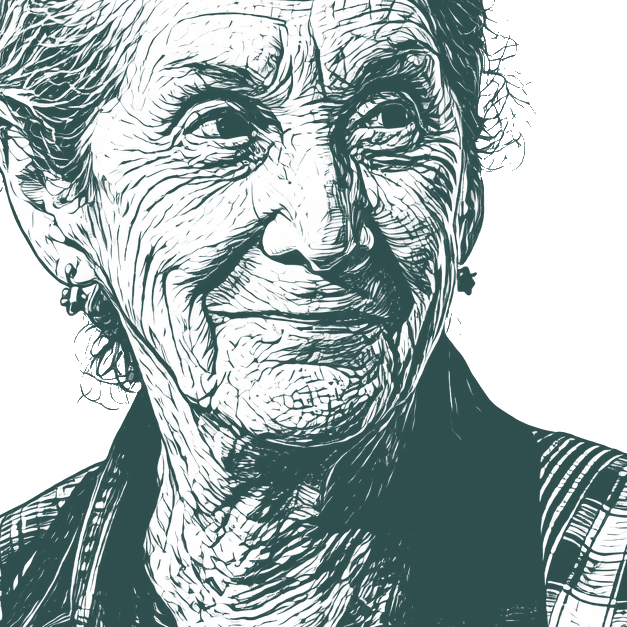
The writer is of service to humankind only insofar as the writer uses the word even against his or her own loyalties, trusts the state of being, as i… - Nadine Gordimer
""
The writer is of service to humankind only insofar as the writer uses the word even against his or her own loyalties, trusts the state of being, as it is revealed, to hold somewhere in its complexity filaments of the cord of truth, able to be bound together, here and there, in art: trusts the state of being to yield somewhere fragmentary phrases of truth, which is the final word of words, never changed by our stumbling efforts to spell it out and write it down, never changed by lies, by semantic sophistry, by the dirtying of the word for the purposes of racism, sexism, prejudice, domination, the glorification of destruction, the curses and the praise-songs.
Nadine Gordimer (20 November 1923 – 13 July 2014) was a South African Jewish novelist and writer, winner of the 1991 Nobel Prize in literature and 1974 Booker Prize.*, recognized as a writer "who through her magnificent epic writing has ... been of very great benefit to humanity".[1]
Biography information from
Wikiquote·
Portrait adapted from
Wikimedia Commons, Boberger. Photo: Bengt Oberger (CC BY)
It was Sinclair's The Jungle that really started me thinking about politics: I thought, good God, these people who are exploited in a meat-packing factory-they're just like blacks here. And the whole idea that people came to America, not knowing the language, having to struggle in sweat shops. . . I didn't relate this to my own father, because my father was bourgeois by then... but I related it to the blacks. Again, what a paradox that South Africa was the blacks' own country, but they were recruited just as if they had been migrant workers for the mines. So I saw the analogy. And that was the beginning of my thinking about my position vis-à-vis blacks. But though I didn't know anything-I was twelve or thirteen, and leading the odd kind of life I did, living in books-I began to think about these things before, perhaps, I was ready for them. When I got to university, it was through mixing with other people who were writing or painting that I got to know black people as equals. In a general and inclusive, non-racial way, I met people who lived in the world of ideas, in the world that interested me passionately. In the town where I lived, there was no mental food of this kind at all. I’m often amazed to think how they live, those people, and what an oppressed life it must be, because human beings must live in the world of ideas. This dimension in the human psyche is very important. It was there, but they didn’t know how to express it.
propos[ed] a future South Africa, not only on terms of equality of races but of sexes, too”
PREMIUM FEATURE
Advanced Search Filters
Filter search results by source, date, and more with our premium search tools.