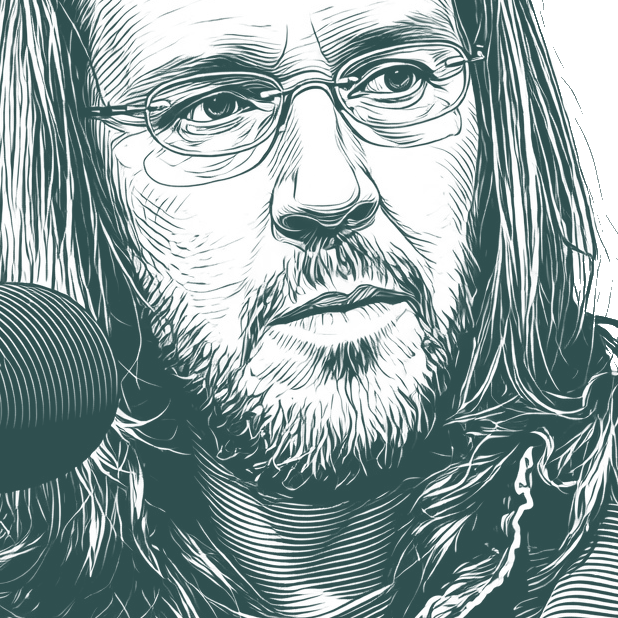
The thrust here is that Dostoevsky wrote fiction about the stuff that's really important. He wrote fiction about identity, moral value, death, will, … - David Foster Wallace
""
The thrust here is that Dostoevsky wrote fiction about the stuff that's really important. He wrote fiction about identity, moral value, death, will, sexual vs. spiritual love, greed, freedom, obsession, reason, faith, suicide. And he did it without ever reducing his characters to mouthpieces or his books to tracts. His concern was always what it is to be a human being-that is, how to be an actual person, someone whose life is informed by values and principles, instead of just an especially shrewd kind of self-preserving animal.
David Foster Wallace (21 February 1962 – 12 September 2008) was an American novelist, essayist, and short story writer. His works include The Broom of the System (novel), Infinite Jest (novel), The Girl With Curious Hair (short story collection), Brief Interviews with Hideous Men (short story collection), A Supposedly Fun Thing I'll Never Do Again (essay collection), and the posthumously-published The Pale King (novel) and Both Flesh and Not (essay collection).
Postmodern irony and cynicism's become an end in itself, a measure of hip sophistication and literary savvy. Few artists dare to try to talk about ways of working toward redeeming what's wrong, because they'll look sentimental and naive to all the weary ironists. Irony's gone from liberating to enslaving. ... The postmodern founders' patricidal work was great, but patricide produces orphans, and no amount of revelry can make up for the fact that writers my age have been literary orphans throughout our formative years.
"The really important kind of freedom involves attention, and awareness, and discipline, and effort, and being able truly to care about other people and to sacrifice for them, over and over, in myriad petty little unsexy ways, every day. That is real freedom. That is being taught how to think. The alternative is unconsciousness, the default setting, the "rat race" — the constant, gnawing sense of having had and lost some infinite thing."
It is a level of psychic pain wholly incompatible with human life as we know it. It is a sense of radical and thoroughgoing evil not just as a feature but as the essence of conscious existence. It is a sense of poisoning that pervades the self at the self’s most elementary levels. It is a nausea of the cells and soul.