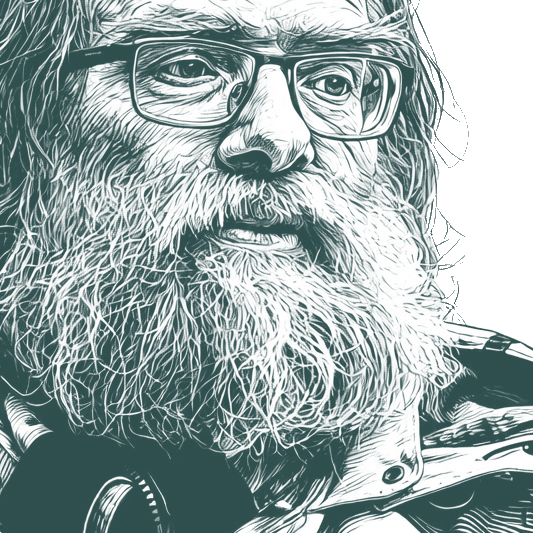
The violent tendencies of Islam are not a propaganda bandied about by some querrulants, but a daily fact of life for Hindus in Jammu or Dhaka. It is … - Koenraad Elst
""
The violent tendencies of Islam are not a propaganda bandied about by some querrulants, but a daily fact of life for Hindus in Jammu or Dhaka. It is simply impossible to understand Hindu Revivalism for people who are adamant about disregarding or denying these facts.
English
Collect this quote
About
Koenraad Elst
Koenraad Elst (born 7 August 1959) is a Flemish right wing Hindutva author, known primarily for his support of the Out of India theory and the Hindutva movement. Scholars have accused him of harboring Islamophobia.
Likewise, central concepts of Sikhi are properly derived from ancient Hindu concepts, e.g. the mantra So’ham (“I am He”, viz. He who lives in the sun) has Vedic origins but reappears in glory in Sikh scripture and practice. The entry Dasham Granth recounts how the last Sikh Guru Govind Singh had stories from the Puranas translated for his flock. It hardly makes sense to argue this point further, for there are literally hundreds of indications for the view that Sikhi is just one among the many Hindu traditions.
At a conference where India’s top archaeologists announce one after another that the excavations in the sites where they work, keep on throwing up more evidence of continuity and a glaring absence of signs of an invasion, is can safely be said that the existing invasionist hypothesis has been rendered highly improbable.
Works in ChatGPT, Claude, or Any AI
Add semantic quote search to your AI assistant via MCP. One command setup.
So, you may continue to throw mud at me. But I trust that through all this mud, an inconvenient fact will shine through: I have done only this much, but at least I have done it. You may try to give a dirty twist to it by calling it "insufferable grandstanding" or, even worse, "white skin". But when all is said and done, a simple fact remains standing: I did it, you did not.