American novelist and non-fiction writer
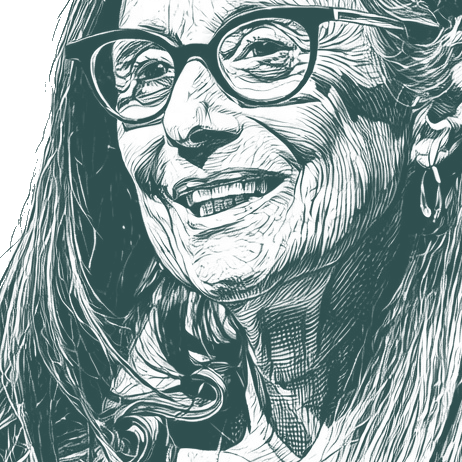
Anne Lamott (born 10 April 1954) is an American novelist and non-fiction writer.
Bio from: Wikiquote (CC BY-SA 4.0) · Portrait adapted from: Wikimedia Commons, Rosiestep (CC BY-SA)
Showing quotes in randomized order to avoid selection bias. Click Popular for most popular quotes.
Imagining God can be so different from wishful thinking, if your spiritual experiences change your behavior over time. Have you become more generous, which is the ultimate healing? Or more patient, which is a close second? Did your world become bigger and juicier and more tender? Have you become ever so slightly kinder to yourself? This is how you tell.
"But how?" my students ask. "How do you actually do it?"
You sit down, I say. You try to sit down at approximately the same time every day. This is how you train your unconscious to kick in for you creatively. So you sit down at, say, nine every morning, or ten every night. You put a piece of paper in the typewriter, or you turn on the computer and bring up the right file, and then you stare at it for an hour or so. You begin rocking, just a little at first, and then like a huge autistic child. You look at the ceiling, and over at the clock, yawn, and stare at the paper again. Then, with your fingers poised on the keyboard, you squint at an image that is forming in your mind — a scene, a locale, a character, whatever — and you try to quiet your mind so you can hear what that landscape or character has to say above the other voices in your mind.
We write to expose the unexposed. Most human beings are dedicated to keeping that one door shut. But the writer's job is to see what's behind it, to see the bleak unspeakable stuff, and to turn the unspeakable into words - not just into any words but if we can, into rhythm and blues. You can't do this without discovering your own true voice, and you can't find your true voice and peer behind the door and report honestly and clearly to us if your parents are reading over your shoulder.