For want of the apparatus of propositional functions, many logicians have been driven to the conclusion that there are unreal objects. It is argued, e.g., by Meinong, that we can speak about "the golden mountain," "the round square," and so on; we can make true propositions of which these are the subjects; hence they must have some kind of logical being, since otherwise the propositions in which they occur would be meaningless. In such theories, it seems to me, there is a failure of that feeling for reality which ought to be preserved even in the most abstract studies. Logic, I should maintain, must no more admit a unicorn than zoology can; for logic is concerned with the real world just as truly as zoology, though with its more abstract and general features.
British philosopher and logician (1872–1970)
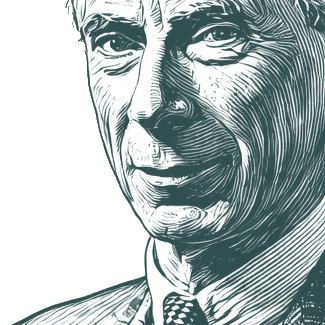
Bertrand Arthur William Russell, 3rd Earl Russell (May 18, 1872 – February 2, 1970) was a British philosopher, logician, mathematician, historian, and social critic. In 1950, he was awarded a Nobel Prize in Literature.
Bio from: Wikiquote (CC BY-SA 4.0) · Portrait adapted from: Wikimedia Commons, Bassano Ltd (Public domain / CC0)
Birth Name:
Bertrand Arthur William Russell
Alternative Names:
Bertrand Russell, 3rd Earl Russell
•
Bertrand Russell, Earl Russell
•
Bertrand Arthur William Russell, 3rd Earl Russell
•
Russell
From Wikidata (CC0)

Showing quotes in randomized order to avoid selection bias. Click Popular for most popular quotes.
PREMIUM FEATURE
Advanced Search Filters
Filter search results by source, date, and more with our premium search tools.
Children must be under authority, and are themselves aware that they must be, although they like to play a game of rebellion at times. The case of children is unique in the fact that those who have authority over them are sometimes fond of them. Where this is the case, the children do not resent the authority in general, even when they resist it on particular occasions. Education authorities, as opposed to teachers, have not this merit, and do in fact sacrifice the children to what they consider the good of the State by teaching them "patriotism," i.e., a willingness to kill and be killed for trivial reasons.
The instinctive foundation of the intellectual life is curiosity, which is found among animals in its elementary forms. Intelligence demands an alert curiosity, but it must be of a certain kind. The sort that leads village neighbours to try to peer through curtains after dark has no very high value. The widespread interest in gossip is inspired, not by a love of knowledge but by malice: no one gossips about other people's secret virtues, but only about their secret vices. Accordingly most gossip is untrue, but care is taken not to verify it. Our neighbour's sins, like the consolations of religion, are so agreeable that we do not stop to scrutinise the evidence closely.
The past alone is truly real: the present is but a painful, struggling birth into the immutable being of what is no longer. Only the dead exist fully. The lives of the living are fragmentary, doubtful, and subject to change; but the lives of the dead are complete, free from the sway of Time, the all but omnipotent lord of the world. Their failures and successes, their hopes and fears, their joys and pains, have become eternal—our efforts cannot now abate one jot of them. Sorrows long buried in the grave, tragedies of which only a fading memory remains, loves immortalized by Death's hallowing touch these have a power, a magic, an untroubled calm, to which no present can attain. ...On the banks of the river of Time, the sad procession of human generations is marching slowly to the grave; in the quiet country of the Past, the march is ended, the tired wanderers rest, and the weeping is hushed.
When I was a child the atmosphere in the house was one of puritan piety and austerity. There were family prayers at eight o'clock every morning. Although there were eight servants, food was always of Spartan simplicity, and even what there was, if it was at all nice, was considered too good for children. For instance, if there was apple tart and rice pudding, I was only allowed the rice pudding. Cold baths all the year round were insisted upon, and I had to practice the piano from seven-thirty to eight every morning although the fires were not yet lit. My grandmother never allowed herself to sit in an armchair until the evening. Alcohol and tobacco were viewed with disfavor although stern convention compelled them to serve a little wine to guests. Only virtue was prized, virtue at the expense of intellect, health, happiness, and every mundane good.
The Ten Commandments that, as a teacher, I should wish to promulgate, might be set forth as follows: 1. Do not feel absolutely certain of anything. 2. Do not think it worth while to proceed by concealing evidence, for the evidence is sure to come to light. 3. Never try to discourage thinking for you are sure to succeed. 4. When you meet with opposition, even if it should be from your husband or your children, endeavour to overcome it by argument and not by authority, for a victory dependent upon authority is unreal and illusory. 5. Have no respect for the authority of others, for there are always contrary authorities to be found. 6. Do not use power to suppress opinions you think pernicious, for if you do the opinions will suppress you. 7. Do not fear to be eccentric in opinion, for every opinion now accepted was once eccentric. 8. Find more pleasure in intelligent dissent that in passive agreement, for, if you value intelligence as you should, the former implies a deeper agreement than the latter. 9. Be scrupulously truthful, even if the truth is inconvenient, for it is more inconvenient when you try to conceal it. 10. Do not feel envious of the happiness of those who live in a fool's paradise, for only a fool will think that it is happiness.