The causes of two other riots are stated in the well-known indeterminate terminology: "Alleged misbehavior with a girl of the other community". but the two remaining riot causes, the only ones clearly saying which community was attacked (and leaving little doubt as to which community attacked), are these : "Stoning of Holi procession passing a place of worship", and "Alleged murder of the president of VHP, Kheda District, by persons belonging to other community". One might of course start blaming any possible (I hasten to prefix alleged) provocative slogans uttered by the processionists and by that local VHP leader; but normally, people who start the violence, like throwing stones or committing murder, are held responsible for these acts, and at least partly responsible for the reactive violence which they may trigger. It is humanly quite feasible to listen to objectionable and insulting slogans without having a knee-jerk reaction of throwing bombs. It is a free human decision to react with violence. At worst, slogans can be a reason for violence ; given human freedom, they can never be the cause. This fake excuse of the provocative slogans leading mechanically to stone-throwing and worse, is used routinely by biased reporters. For another example, on October 30 there was a riot in Bijnor, with officially 14 people killed, others say 55. A procession with about 100 women members of Durga Vahini had gone out to the Ghanta Ghar area. "There they raised communal slogans, resulting in stone-pelting and bomb-throwing." This cheap excuse for a pre-planned bomb attack is even contradicted by other information in the same article.... This case proves that newspapers keep on blaming the slogan-shouters even when it is crystal-clear from their own information that the violence was premeditated and engineered by the other side.
Belgian author
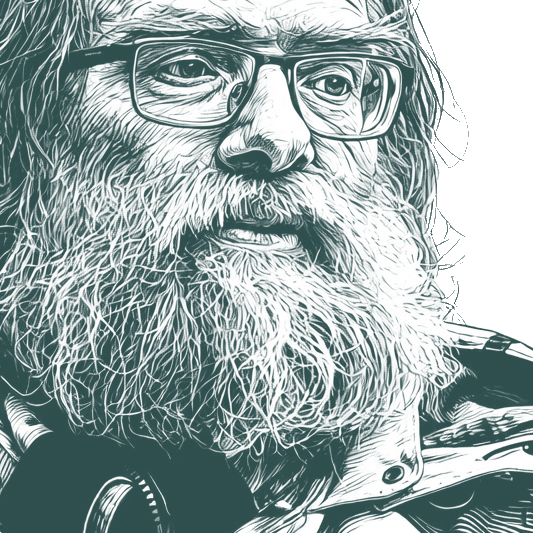
Koenraad Elst (born 7 August 1959) is a Flemish right wing Hindutva author, known primarily for his support of the Out of India theory and the Hindutva movement. Scholars have accused him of harboring Islamophobia.
Bio from: Wikiquote (CC BY-SA 4.0) · Portrait adapted from: Wikimedia Commons, Rosehubwiki (CC BY-SA)
Alternative Names:
Elst, Koenraad
From Wikidata (CC0)
Showing quotes in randomized order to avoid selection bias. Click Popular for most popular quotes.
This blaming Westerners naturally extends into the field of scholarship. Thus, the evil of Indians aping Westerners is blamed on Westerners, including Orientalists, in that they are said to have deduced many Indian achievements from foreign sources and thus hurt Indian self-esteem. E.g., even now the Dutch Orientalist Johannes Bronkhorst derives Buddhist Abhidharma and debating techniques from Greek philosophy, just as many before him allotted a pivotal role to the Greeks in developing the best of Hindu civilization, including the Buddha statue and the culture of Mandirs (temples) and Murtis (idols). David Pingree and Kim Plofker derive much of Indian astronomy from Mesopotamia. They are probably wrong, but I would plead for their apoliticism and innocence.
It also contains blissful nonsense about communal amity in places where the original sources only mention enmity. Thus, it says that Bahmani sultan Tajuddin Firuz extracted tribute payments and the hand of the king's daughter from the Hindu bastion Vijayanagar after two military campaigns, and that this resulted in "the establishment of an apparently amicable relationship between the two rulers". Jawaharlal Nehru considered the induction of Hindu women in Muslim harems as the cradle of composite culture (his euphemism for Hindu humiliation), but it is worse if even the venerable Encyclopedia considers the terms of debate as a sign of friendship. At any rate, the article goes on to observe naively that peace lasted only for ten years, when Vijaynagar forces inflicted a crushing defeat on Firuz. In this case, the more circumspect form of negationism is at work: keeping the inconvenient facts out of the readers' view, and manipulating the terminology.
Try QuoteGPT
Chat naturally about what you need. Each answer links back to real quotes with citations.
I am presently concentrating on more complex and more important issues in the history of Hindu thought, while the history of Islam has lost my interest because it is so simple and our conclusions about it are not at all threatened with a need for revision. As a doctrine, it is a mistake, and as a historical movement, it has a very negative record vis-à-vis Unbelievers, especially the Hindus. The secularists and their foreign dupes may cry themselves hoarse in their denial of these straightforward and amply proven facts, they don’t stand a chance, though not for want of trying.
Conversely, the western pelvic floor muscle exercises that every pregnant woman nowadays, are actually inspired on the yogic mula bandha ("root lock"), not to mention the numerous neuro- and psychological techniques that are based on ancient Indian meditation exercises. A recent example is Mindfulness, a velvet version of Vipassana meditation which was, among others, already practiced by the Buddha.
It should be borne in mind that the number of people killed by the Soviet regime between 1917 and 1985 is estimated at between 34 million (on the basis of official figures) and 67 million (according to Alexsandr Solzhenitsyn). In the same order of magnitude we find Tse-tung's number of victims (some 30 million), during the communist take-over, the Great Leap Forward and the Cultural Revolution. Till today, there is a Chinese Gulag archipelago in the occupied territories of Tibet (including Chinghai), East-Turkestan and Inner Mongolia.
Perhaps Sinha’s allegations of “fabrication” are a projection of his very own conduct?... So, Rajesh Sinha, well on his way to becoming an “eminent historian”, is wrong. I don’t know whether he is deluded or deliberately lying, both are ailments common among his tribe.... So let us finally bypass all the querulous claims by our zealous secularist and see for ourselves what Ibn Battuta himself says.
Of the other arguments, he knew a few but more have been added since: (1) linguistic paleontology: agreed here not to prove a cold homeland or any homeland at all; (2) common developments with Greek, and generally the geographical distribution of the isoglosses, is better explained by an Indian “extreme” homeland than by radiation from the Russian centre; (3) Finno-Ugric has hundreds of Iranian loanwords but imparted no words to Iranian or Indo-Aryan (the seeming exception of Guṅgu, “moon”, can either be a coincidental homonymy, date from an earlier Nostratic period, or was somehow a loan from Indo-Iranian), which is typical for a colonial situation, with Scythian Iranian imparting words and also borrowing some but not communicating them back to the homeland; (4) Mitannic can be shown to belong to the youngest layer of the Ṛg-Veda, so allowing for the language to emigrate and to become a dead substrate of Hurrian (and the similar case of Kassite), the Ṛg-Veda must have been complete by 1800 BC or so; 5) geographical distribution has the homeland typically in a far corner (Amerind superfamily, Bantu/Austronesian family, Turkic group, Arabic/Russian language), not in the centre (IE: Volga), which also is not the zone of greatest diversity, on the contrary; (6) Vedic literature contains a few astronomical passages datable because of the precession (ca. 1° in 71 years), e.g. Kauṣītaki Brāhmaṇa 2300 BC instead of ca. 1000 BC, Vedāṅga Jyotiṣa 1300 BC instead of ca. 400 BC, incompatible with an invasion scenario ca. 1500 BC; (7) kentum substrate in Bangani, India, e.g. dokru instead of expected daśru, “tear”; (8) Vedic and Puranic literature refers several times to emigrations, never to early immigrations, and the Northwest was not venerated as an area of origin; (9) the agricultural terminology proves, contra Masica, to be compatible with an Indian homeland.
Enhance Your Quote Experience
Enjoy ad-free browsing, unlimited collections, and advanced search features with Premium.