So, all the predictions quoted above are far too conservative, for they are based on a linear projection. In reality, the observed trends are accelerating, so Muslims will need far less than 316 years to outnumber the Hindus. According to Mukherji, the Hindu percentage of ex-British India (including India, Pakistan, Bangladesh and Burma) should now have declined by about 13%, down to 54% of the total.
Belgian author
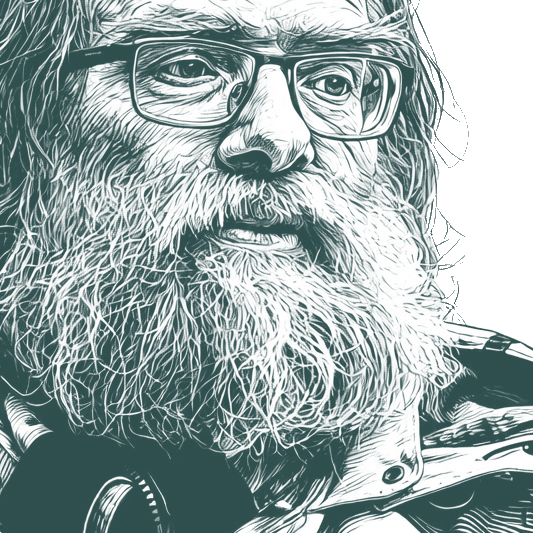
Koenraad Elst (born 7 August 1959) is a Flemish right wing Hindutva author, known primarily for his support of the Out of India theory and the Hindutva movement. Scholars have accused him of harboring Islamophobia.
Bio from: Wikiquote (CC BY-SA 4.0) · Portrait adapted from: Wikimedia Commons, Rosehubwiki (CC BY-SA)
Alternative Names:
Elst, Koenraad
From Wikidata (CC0)
Showing quotes in randomized order to avoid selection bias. Click Popular for most popular quotes.
The crime is not that a usurper structure was demolished, but that the government (egged on by the English media, the CPM, the JNU historians and similar usual suspects) had been thwarting the restoration of a Hindu sacred site to its pilgrim constituency, the Hindus. The right policy would have been to acknowledge and act upon the self-evident principle that a Hindu sacred site should be in Hindu custody and adorned with Hindu architecture. Will the secularists insist on the imposition of a Rama temple on the Kaaba site in Mecca, or on the Temple Mount in Jerusalem? Of course not, and for the same reason there should not be a mosque on a hill that for centuries has been the main site dedicated to Rama.
The Bhagalpur riot of 1989, one of the biggest massacres in India since Partition, provides a case study in manipulation at the source, viz. the politically appointed official enquiry committee. The one-man commission consisting of Justice (retd.) R.N.Prasad was not finding a BJP or otherwise "Hindu communalist" hand behind the riots, so the Stte Government of Bihar led by Laloo Prasad Yadav expanded the commission to three members. The two new members then duly made the required "discoveries" and brought out another report..., finding the BJP guilty... The Bhagalpur riot took a terrible toll among Muslims, which the fact that the Muslims started the violence in the first place cannot justify; nevertheless, Bhagalpur still has a large Muslim population, and Bangladeshi infiltrators still consider it safe enough to settle there in their thousands. In fact, the migration figures are the best refutation of the "Hindu bully, Muslim victim" myth: as against the constant trickle of Hindu refugees out of Pakistan and Bangladesh, there is no Muslim flight out of India, but on the contrary a massive Muslim influx into India.
PREMIUM FEATURE
Advanced Search Filters
Filter search results by source, date, and more with our premium search tools.
We will not change the subject and discuss the large though unknown number of Hindus killed by Christian separatists in Mizoram and Nagaland over the decades, nor the terror of Christian natives in Fiji against Hindus, the latter phenomenon... is not the target of any protest in the world media, and the first is never even mentioned, so I suppose we need not attach any undue importance to the death of Hindus at the hands of Christians.
The fact that Hindu temple materials (14 black-stone sculptured pillars) have been used in the Babri Masjid is not an unusual feature requiring a special explanation; on the contrary, it was a fairly common practice meant as a visual display of the victory of Islam over infidelity. It was done in many mosques that have forcibly replaced temples, e.g. the Gyanvapi mosque in Varanasi (in which a part of the Kashi Vishvanath temple is still visible), the Adhai-Din-ka-Jhonpra mosque in Ajmer, the Quwwat-ul-Islam mosque in Delhi, or, outside India, the Jama Masjid of Damascus (which was a Christian cathedral)... There are Hindu temple materials in mosques attributed to Babar in Sambhal (replacing a Vishnu temple, and dated by archaeologists to the Sultanate period, just like the Ayodhya “Babri” Masjid) and Pilakhana. Local tradition affirms that the Babri Masjids in Palam, Sonipat, Rohtak, Panipat, and Sirsa have replaced Brahminical or Jain temples. The contemporary Tarikh-i-Babari describes how Babar’s troops “demolished many Hindu temples at Chanderi” when they occupied it.
Most importantly, for the ancient period, Indian Marxist and other anti-Hindu historians posit a massive conflict (between Aryan invaders and natives) in spite of the total absence of either textual or archaeological evidence for such conflict; while for the medieval period, they wax eloquent about an idyllic “composite culture” and deny a massive conflict spanning centuries (viz. between Muslim invaders and Hindu natives), against the copiously available evidence for this conflict, both textual and archaeological. This observation is entirely correct: both ancient and medieval history have been rewritten in the sense of belittling and blackening Hindu civilization and extolling its enemies.
Ostensibly the hymn is from the final stage of Rig-Vedic composition, shortly before Veda-Vyasa’s final editing of the hymns into the fully-formed Vedas. It soon became the Vedic bedrock of varna doctrine and gets reproduced or quoted to that effect in younger Vedic writings, including the Atharva & Yajur Veda (so, there also interpolations?), the Panchavimsha Brahmana, Taittitiya Aranyaka, Mahabharata and Bhagavata Purana.
Prof. Irfan Habib, in a combine with Dr. Jahnawi Roy and Dr. Pushpa Prasad, dismissed this inscription as stolen from the Lucknow Museum and to be nothing other than the Treta ka Thakur inscription. The curator kept this inscription under lock, but after some trying, Kishore Kunal, author of another Ayodhya book (Ayodhya Revisited, 2016), could finally gain access to it and publish a photograph. What had been suspected all along, turns out to be true: Prof. Habib, who must have known both inscriptions, has told a blatant lie. Both inscriptions exist and are different. Here they have been neatly juxtaposed on p.104-5. Yet, none of the three scholars has “responded to the publication of the photograph of the Treta ka Thakur inscription, which falsifies the arguments they have been persistently advocating for over two decades.” (p.112)
But then, among the organizers of the Indology session, I am a controversial name because of my known skepticism towards the pious lies of my peers, their so-called secularism paradigm flavoured with anti-Brahmanism. That far at least the anti-Hindu "South-Asian Studies" school has penetrated in the Orientalist institutions, unlike in the other sections, where scholars aren't expected to militate against their chosen object of study. In spite of Said's fantasies, most Orientalists had or have a tendency to "go native", to sympathize or identify with the culture they study; most Sinologists can argue the case for China with conviction, or at least tone down and relativize any criticism that is unavoidable. By contrast, only in the case of India is a scholar accepted in his peer group if he gives proof of a bias against the country and religion he has chosen to study.
Without really noticing, the Western press has become the mouth-piece of the Marxist-Muslim alliance which dictates political parlance in India. I assume only a few frontline journalists are conscious participants in the ongoing disinformation campaign....Regardless of the moral quality of such distortive reporting, it goes to show to what extent the negationist faction in the Indian media has managed to picture the Hindus as the bad guys in the eyes of the world.