English writer and lexicographer (1709–1784)
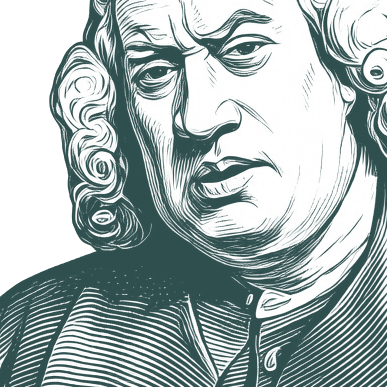
Samuel Johnson (18 September 1709 [7 September O.S.] – 13 December 1784) was a British author, linguist and lexicographer. He is often referred to as simply Dr. Johnson in the history of literature and is regarded as the greatest man of letters in English history.
Bio from: Wikiquote (CC BY-SA 4.0) · Portrait adapted from: Wikimedia Commons, Joshua Reynolds (Public domain / CC0)
From Wikidata (CC0)

Advanced Search Filters
Filter search results by source, date, and more with our premium search tools.
Shakespeare's plays are not in the rigorous and critical sense either tragedies or comedies, but compositions of a distinct kind; exhibiting the real state of sublunary nature, which partakes of good and evil, joy and sorrow, mingled with endless variety of proportion and innumerable modes of combination; and expressing the course of the world, in which the loss of one is the gain of another; in which, at the same time, the reveller is hasting to his wine, and the mourner burying his friend; in which the malignity of one is sometimes defeated by the frolick of another; and many mischiefs and many benefits are done and hindered without design.
It ought to be deeply impressed on the minds of all who have voices in this national deliberation, that no man can deserve a seat in parliament, who is not a patriot. No other man will protect our rights: no other man can merit our confidence. A patriot is he whose publick conduct is regulated by one single motive, the love of his country; who, as an agent in parliament, has, for himself, neither hope nor fear, neither kindness nor resentment, but refers every thing to the common interest.