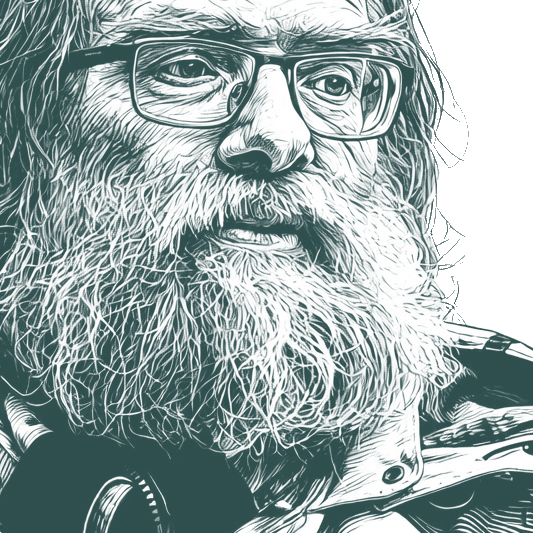
The very notion of conversion is un-Hindu, it is a projection of a Christian concern. - Koenraad Elst
""
The very notion of conversion is un-Hindu, it is a projection of a Christian concern.
English
Collect this quote
About
Koenraad Elst
Koenraad Elst (born 7 August 1959) is a Flemish right wing Hindutva author, known primarily for his support of the Out of India theory and the Hindutva movement. Scholars have accused him of harboring Islamophobia.
To take Sikhism as a separate religion, after summarizing its genesis as a sect within the Hindu movement of Nirguna Bhakti (“devotion to the one without qualities”), is another compromise with prevailing opinion. The scholarly but isolating view is that this is simply a Hindu sect.
One consequential instance in India was the Ayodhya scholars’ debate in the winter of 1990-1991, organized by the Janata (Left-populist) government headed by Chandra Shekhar. This was won hands down by the scholars affirming the existence of a Hindu temple underneath the Babri Masjid, first against a delegation of Muslim leaders unfamiliar with historical methodology, selected by the Babri Masjid Action Committee, then against a group of Marxist academics called in by that same Committee for saving the day. The latter’s position was but an elaboration of the official orthodoxy created by a group of academics from JNU when they issued a statement, The Political Abuse of History (1989), denying the existence of temple remains underneath the Babri Masjid. It had been taken over as Gospel truth by most of the academic and journalistic India-watchers in the West, including Truschke’s mentors. They kept the lid on the debate’s outcome... After Court-ordered excavations in 2003 had definitively confirmed the existence of the temple, acknowledged in the Court verdict of 2010, they have all turned conspicuously silent on Ayodhya.
By placing the free choice of the individual above the duties or dogmas imposed by religion, secularism has done enough to emancipate man from religion. Man can choose a religious view or commitment rather than having it imposed on him. In that sense, secularism does not mean anti-religious activism. It only means subjecting religion to human choice, which was revolutionary enough in the European context of Church power trying to impose itself... So, secularism as a political term means : neutrality of the government in religious matters. That is all. Secularism does not mean that the state promotes one belief system, it means that the state limits itself to guaranteeing the individual's freedom to find out about these matters for himself. That at least is the correct meaning of the term "secularism" as it has historically developed in the West, in a period when individual freedom was considered the topmost value. If one chooses secularism as a component for a state system, it remains to be seen how this fundamental concept is worked out in the details of a secular Constitution, but that state neutrality and respect for the individual's intellectual and religious freedom should be the spirit of such a Constitution, is certain.