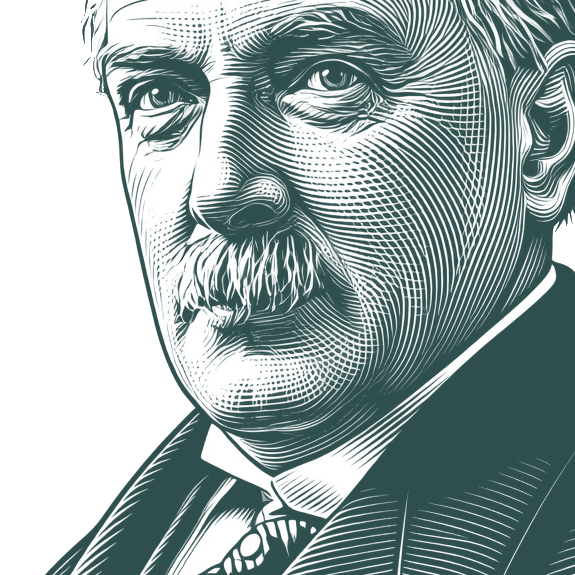
Lenin was not concerned about democratic government. His main purpose was the social and economic emancipation of the worker under any form of govern… - David Lloyd George
""
Lenin was not concerned about democratic government. His main purpose was the social and economic emancipation of the worker under any form of government that would be most suited to achieve that end. The Bolsheviks were numerically a small party, drawn almost entirely from amongst the town workers, and their grip on power was not based on any principle of majority rule, gauged by the counting of heads, but on the right of the strongest, measured in terms of firm will, dear purpose and armed force. The peasants acquiesced with the patient docility of a people accustomed for generations to autocratic rule.
Why had Wales made sacrifices in the face of unexampled difficulties and intimidation from squires and agents? It was not to install one statesman in power. It was not to deprive one party of power in order to put another party in power. It was not to transfer the emoluments of office from one statesman to another. No; it was done because Wales had by an overwhelming majority demonstrated its determination to secure its own progress. ... Welsh members wanted nothing for themselves but something for their country, and I do not think they would support a Liberal Ministry, I do not care how illustrious the Minister might be who led it, unless it pledged itself to concede to Wales those great measures of reform on which Wales had set its heart.
The cant of it was nauseating. Even the petrol fumes of the quenched revolutionary torch will serve our nostrils well by cleansing the air of the sickening incense burnt by those departed worshippers of their own image.
Artillery became bogged, tanks stuck in the mire, unwounded men by the hundreds and wounded men by the thousands sank beyond recovery into the filth. It is a comment upon the intelligence with which the whole plan had been conceived and prepared, that after the ridge had been reached it was an essential part of the plan that masses of cavalry were intended to thunder across this impassable bog to complete the rout of a fleeing enemy. For months, hundreds of thousands of British troops fought through this slough. They sheltered and they slept in mud-holes. When they squelched along, they were shot down into the slush; if wounded, they were drowned in the slime: but the survivors still crept and dragged onward for four months from shell-hole to shell-hole, with their rifles and machine-guns choked with Flemish ooze, advancing about a mile a month. It was a tragedy of heroic endurance enacted in mud, and the British Press rang with praises of the ruthless courage, untiring calm and undaunted tenacity—of the Commander-in-Chief!