[Sonetto XVI]
Vede perfettamente onne salute
chi la mia donna tra le donne vede;
quelle che vanno con lei son tenute
di bella grazia a Dio render me… - Dante Alighieri
""
[Sonetto XVI]
Vede perfettamente onne salute chi la mia donna tra le donne vede; quelle che vanno con lei son tenute di bella grazia a Dio render merzede.
E sua bieltate è di tanta vertute, che nulla invidia a l’altre ne procede, anzi la face andar seco vestute di gentilezza, d’amore e di fede.
La vista sua fa onne cosa umile; e non fa sola sé parer piacente, ma ciascuna per lei riceve onore.
Ed è ne li atti suoi tanto gentile, che nessun la si può recare a mente, che non sospiri in dolcezza d’amore.
Italian
Collect this quote
About
Dante Alighieri
Dante Alighieri (c. 30 May 1265 – 13 September 1321), most likely baptized Durante di Alighiero degli Alighieri, was an Italian poet, writer and philosopher. His Divine Comedy, originally called Comedìa (modern Italian: Commedia) and later christened Divina by Giovanni Boccaccio, is widely considered one of the most important poems of the Middle Ages and the greatest literary work in the Italian language.
Biography information from
Wikiquote·
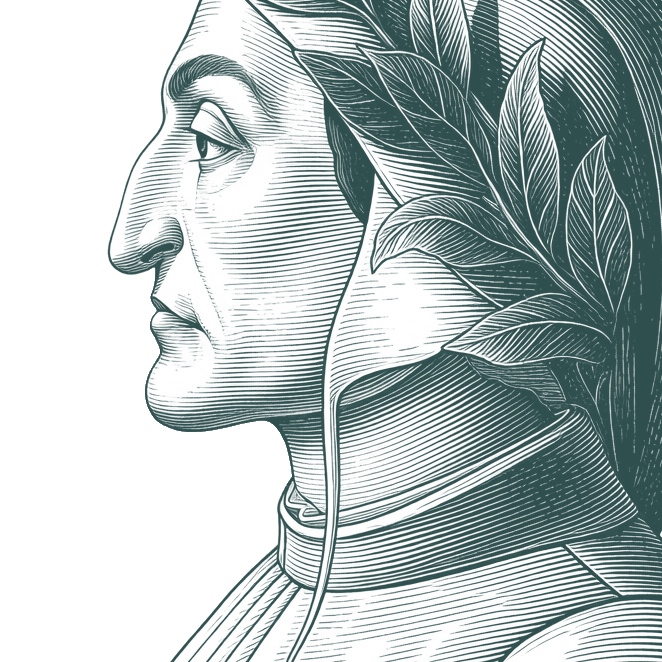
Portrait adapted from
Wikimedia Commons, Sandro Botticelli (Public domain / CC0)
Also Known As
Alternative Names:
Dante
•
Durante degli Alighieri
•
Durante di Alighiero degli Alighieri
"[Sonetto XXI] "L’amaro lagrimar che voi faceste, oi occhi miei, così lunga stagione, facea lagrimar l’altre persone de la pietate, come voi vedeste.
Ora mi par che voi l’obliereste, s’io fosse dal mio lato sì fellone, ch’i’ non ven disturbasse ogne cagione, membrandovi colei cui voi piangeste.
La vostra vanità mi fa pensare, e spaventami sì, ch’io temo forte del viso d’una donna che vi mira.
Voi non dovreste mai, se non per morte, la vostra donna, ch’è morta, obliare". Così dice ’l meo core, e poi sospira."
Let them cease, then, to insult the Roman empire, who pretend that they are the sons of the Church; when they see that Christ, the bridegroom of the Church, sanctioned the Roman empire at the beginning and at the end of His warfare on earth. And now I think that I have made it sufficiently clear that it was by right that the Romans acquired to themselves the empire of the world.
Oh happy people, oh Ausonia, how glorious hadst thou been, if either he, that weakener of thine empire, had never been born, or if his own pious intention had never deceived him?
You did as who who, walking by night, Carries the light behind him, where it does him no good, But is of advantage to those who come after him.