Florentine poet, writer, and philosopher (c. 1265–1321)
Dante Alighieri (c. 30 May 1265 – 13 September 1321), most likely baptized Durante di Alighiero degli Alighieri, was an Italian poet, writer and philosopher. His Divine Comedy, originally called Comedìa (modern Italian: Commedia) and later christened Divina by Giovanni Boccaccio, is widely considered one of the most important poems of the Middle Ages and the greatest literary work in the Italian language.
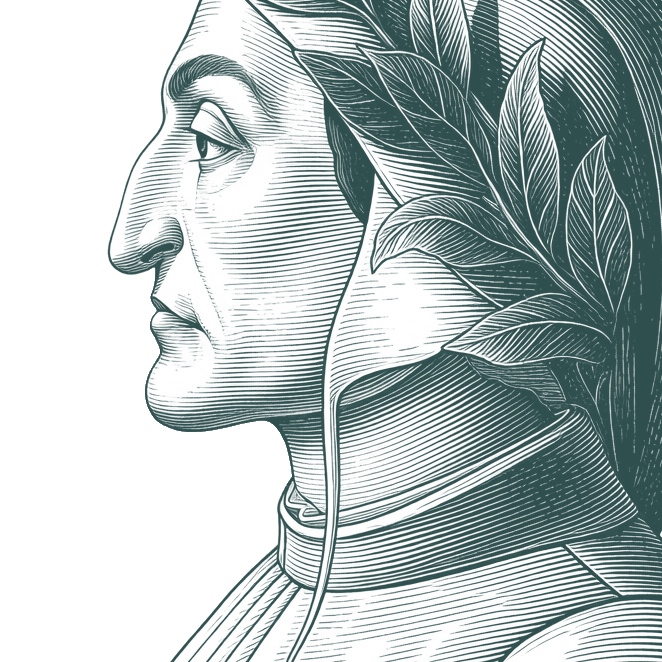
Bio from: Wikiquote (CC BY-SA 4.0) · Portrait adapted from: Wikimedia Commons, Sandro Botticelli (Public domain / CC0)
From Wikidata (CC0)
Through me you go to the grief wracked city; Through me you go to everlasting pain; Through me you go a pass among lost souls. Justice inspired my exalted Creator: I am a creature of the Holiest Power, of Wisdom in the Highest and of Primal Love. Nothing till I was made was made, only eternal beings. And I endure eternally. Surrender as you enter, every hope you have.
[Sonetto I]
A ciascun' alma presa e gentil core
nel cui cospetto ven lo dir presente,
a ciò che mi rescriva in su' parvente,
salute in lor segnor, ciò é Amore.
Gia eran quasi que atterzate l'ore
del tempo che onne stella n'è lucente,
quando m'apparve Amor subitamente,
cui essenza membrar mi dà orrore.
Allegro mi sembrava Amor tenendo
meo core in mano, e ne le bracci' avea
madonna involta 'n un drappo dormendo;
poi la svegliava, d'esto core ardendo
lei paventosa umilmente pascea:
appresso gir lo ne vedea piagendo.
Works in ChatGPT, Claude, or Any AI
Add semantic quote search to your AI assistant via MCP. One command setup.
Ahora es preciso que desheches la pereza; que no se alcanza la fama reclinado en blanda pluma ni al abrigo de colchas; y el que consume su vida sin gloria, deja en pos de sí el mismo rastro que el humo en el aire o la espuima en el agua. Ea, pues, levántate; domina la fatiga con el alma, que vence todos los obstáculos mientras no se envilece con la pesadez del cuerpo.