What Phædrus thought and said is significant. But no one was listening at that time and they only thought him eccentric at first, then undesirable, t… - Robert M. Pirsig
""
What Phædrus thought and said is significant. But no one was listening at that time and they only thought him eccentric at first, then undesirable, then slightly mad, and then genuinely insane. There seems little doubt that he was insane, but much of his writing at the time indicates that what was driving him insane was this hostile opinion of him. Unusual behavior tends to produce estrangement in others which tends to further the unusual behavior and thus the estrangement in self-stoking cycles until some sort of climax is reached. In Phædrus' case there was a court-ordered police arrest and permanent removal from society.
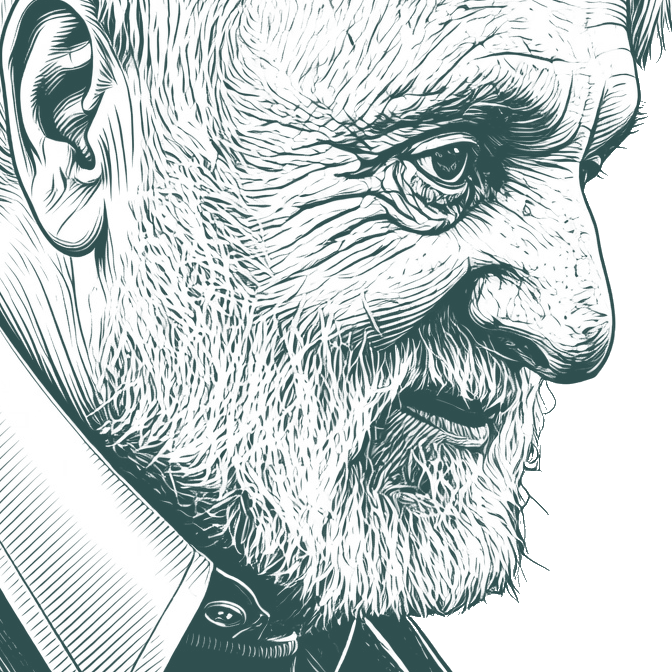
Robert Maynard Pirsig (6 September 1928 – 24 April 2017) was an American philosopher and novelist, most famous for his novel Zen and the Art of Motorcycle Maintenance in which he proposed what has become known as his Metaphysics of Quality (MoQ).
Biography information from
Wikiquote·
Portrait adapted from
Wikimedia Commons, Ian Glendinning, en:User:IanGlendinning (CC BY)
Also Known As
Alternative Names:
Robert Maynard Pirsig
•
Robert Pirsig
The real purpose of the scientific method is to make sure Nature hasn't misled you into thinking you know something you don't actually know. There's not a mechanic or scientist or technician alive who hasn't suffered from that one so much that he's not instinctively on guard. That's the main reason why so much scientific and mechanical information sounds so dull and so cautious. If you get careless or go romanticizing scientific information, give it a flourish here and there, Nature will soon make a complete fool out of you. It does it often enough anyway even when you don't give it opportunities. One must be extremely careful and rigidly logical when dealing with Nature: one logical slip and an entire scientific edifice comes tumbling down. One false deduction about the machine and you can get hung up indefinitely.
It's paradoxical that where people are the most closely crowded, in the big coastal cities in the East and West, the loneliness is the greatest. Back where people were so spread out in western Oregon and Idaho and Montana and the Dakotas you'd think the loneliness would have been greater, but we didn't see it so much. The explanation, I suppose, is that the physical distance between people has nothing to do with loneliness. It's psychic distance, and in Montana and Idaho the physical distances are big but the psychic distances between people are small, and here it's reversed.
Unlimited Quote Collections
Organize your favorite quotes without limits. Create themed collections for every occasion with Premium.
The truths Phaedrus began to pursue were lateral truths; no longer the frontal truths of science, those toward which the discipline pointed, but the kind of truth you see laterally, out of the corner of your eye. In a laboratory situation, when your whole procedure goes haywire, when everything goes wrong or is indeterminate or is so screwed up by unexpected results you can't make head or tail out of anything, you start looking laterally. That's a word he later used to describe a growth of knowledge that doesn't move forward like an arrow in flight, but expands sideways, like an arrow enlarging in flight, or like the archer, discovering that although he has hit the bull's-eye and won the prize, his head is on a pillow and the sun is coming in the window. Lateral knowledge is knowledge that's from a wholly unexpected direction, from a direction that's not even understood as a direction until the knowledge forces itself upon one. Lateral truths point to the falseness of axioms and postulates underlying one's existing system of getting at truth.