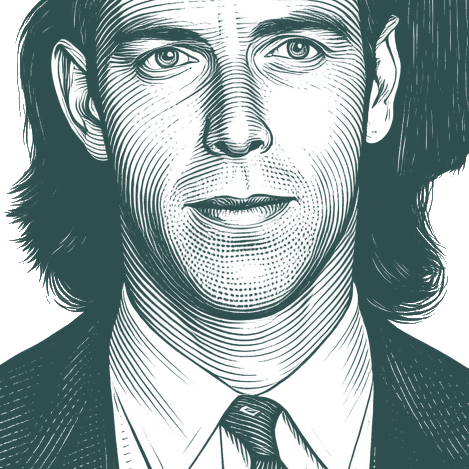
The common error of ordinary religious practice is to mistake the symbol for the reality, to look at the finger pointing the way and then to suck it … - Alan Watts
""
The common error of ordinary religious practice is to mistake the symbol for the reality, to look at the finger pointing the way and then to suck it for comfort rather than follow it. Religious ideas are like words — of little use, and often misleading, unless you know the concrete realities to which they refer. The word “water” is a useful means of communication amongst those who know water. The same is true of the word and the idea called “God.”
I do not, at this point, wish to seem mysterious or to be making claims to “secret knowledge.” The reality which corresponds to “God” and “eternal life” is honest, above-board, plain, and open for all to see. But the seeing requires a correction of mind, just as clear vision sometimes requires a correction of the eyes.
The discovery of this reality is hindered rather than helped by belief, whether one believes in God or believes in atheism. We must here make a clear distinction between belief and faith, because, in general practice, belief has come to mean a state of mind which is almost the opposite of faith. Belief, as I use the word here, is the insistence that the truth is what one would “lief” or wish it to be. The believer will open his mind to the truth on condition that it fits in with his preconceived ideas and wishes. Faith, on the other hand, is an unreserved opening of the mind to the truth, whatever it may turn out to be. Faith has no preconceptions; it is a plunge into the unknown. Belief clings, but faith lets go. In this sense of the word, faith is the essential virtue of science, and likewise of any religion that is not self-deception.
Most of us believe in order to feel secure, in order to make our individual lives seem valuable and meaningful. Belief has thus become an attempt to hang on to life, to grasp and keep it for one’s own. But you cannot understand life and its mysteries as long as you try to grasp it. Indeed, you cannot grasp it, just as you cannot walk off with a river in a bucket. If you t
Alan Wilson Watts (6 January 1915 – 16 November 1973) was an English philosopher, writer, speaker, and expert in comparative religion.
Biography information from
Wikiquote·
Portrait adapted from
Wikimedia Commons, The University of Vermont Alumni Magazine vol. 39 no. 01, p. 22. (Public domain / CC0)
Also Known As
Alternative Names:
Alan Wilson Watts
•
Alan W. Watts
Related quotes. More quotes will automatically load as you scroll down, or you can use the load more buttons.
Shorter versions of this quote
The common error of ordinary religious practice is to mistake the symbol for the reality, to look at the finger pointing the way and then to suck it for comfort rather than follow it.
common error of ordinary religious practice is to mistake the symbol for the reality, to look at the finger pointing the way and then to suck it for comfort rather than follow it.
We are becoming accustomed to a conception of the universe so mysterious and so impressive that even the best father-image will no longer do for an explanation of what makes it run. But the problem then is that it is impossible for us to conceive an image higher than the human image. Few of us have ever met an angel, and probably would not recognize it if we saw one, and our images of an impersonal or suprapersonal God are hopelessly subhuman—jello, featureless light, homogenized space, or a whopping jolt of electricity. However, our image of man is changing as it becomes clearer and clearer that the human being is notsimply and only his physical organism. My body is also my total environment, and this must be measured by light-years in the billions. Hitherto the poets and philosophers of science have used the vast expanse and duration of the universe as a pretext for reflections on the unimportance of man, forgetting that man with "that enchanted loom, the brain" is precisely what transforms this immense electrical pulsation into light and color, shape and sound, large and small, hard and heavy, long and short. In knowing the world we humanize it, and if, as we discover it, we are astonished at its dimensions and its complexity, we should be just as astonished that we have the brains to perceive it.
The startling truth is that our best efforts for civil rights, international peace, population control, conservation of natural resources, and assistance to the starving of the earth — urgent as they are — will destroy rather than help if made in the present spirit. For, as things stand, we have nothing to give. If our own riches and our own way of life are not enjoyed here, they will not be enjoyed anywhere else.
You may think there’s no point in singing unless you are good at it, but that is like saying there is no point in doing anything at all unless you are particularly gifted at it, which is ridiculous.