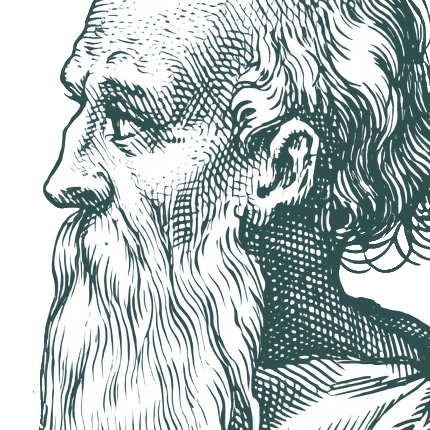
"You journey to Olympia to see the work of Phidias; and each of you holds it a misfortune not to have beheld these things before you die. Whereas whe… - Epictetus
"You journey to Olympia to see the work of Phidias; and each of you holds it a misfortune not to have beheld these things before you die. Whereas when there is no need even to take a journey, but you are on the spot, with the works before you, have you no care to contemplate and study these?
Will you not then perceive either who you are or unto what end you were born: or for what purpose the power of contemplation has been bestowed on you?
"Well, but in life there are some things disagreeable and hard to bear."
And are there none at Olympia? Are you not scorched by the heat? Are you not cramped for room? Have you not to bathe with discomfort? Are you not drenched when it rains? Have you not to endure the clamor and shouting and such annoyances as these? Well, I suppose you set all this over against the splendour of the spectacle and bear it patiently. What then? have you not received greatness of heart, received courage, received fortitude? What care I, if I am great of heart, for aught that can come to pass? What shall cast me down or disturb me? What shall seem painful? Shall I not use the power to the end for which I received it, instead of moaning and wailing over what comes to pass?"
English
Collect this quote
About
Epictetus
Epictetus (c. 55 – c. 135 AD), born a slave, was a Greek Stoic philosopher. His words were recorded by his student Arrian in the Discourses and Enchiridion written in the early 2nd-century.
Biography information from
Wikiquote·
Portrait adapted from
Wikimedia Commons, Theodoor Galle (Public domain / CC0)
Also Known As
Native Name:
ΕΠΙΚΤΗΤΟΣ
Alternative Names:
Epictetus of Hierapolis
•
Epiktetos
Let man be pleased with whatever has pleased God; let him marvel at himself and his own resources for this very reason, that he cannot be overcome, that he has the very powers of evil subject to his control, and that he brings into subjection chance and pain and wrong by means of that strongest of powers – reason. Love reason! The love of reason will arm you against the greatest hardships.
If you intend to improve, throw away such thoughts as these: if I neglect my affairs, I shall not have the means of living: unless I chastise my slave, he will be bad. For it is better to die of hunger and so to be released from grief and fear than to live in abundance with perturbation; and it is better for your slave to be bad than for you to be unhappy.
Unlimited Quote Collections
Organize your favorite quotes without limits. Create themed collections for every occasion with Premium.
It was the first and most striking characteristic of Socrates never to become heated in discourse, never to utter an injurious or insulting word - on the contrary, he persistently bore insult from others and thus put an end to the fray.