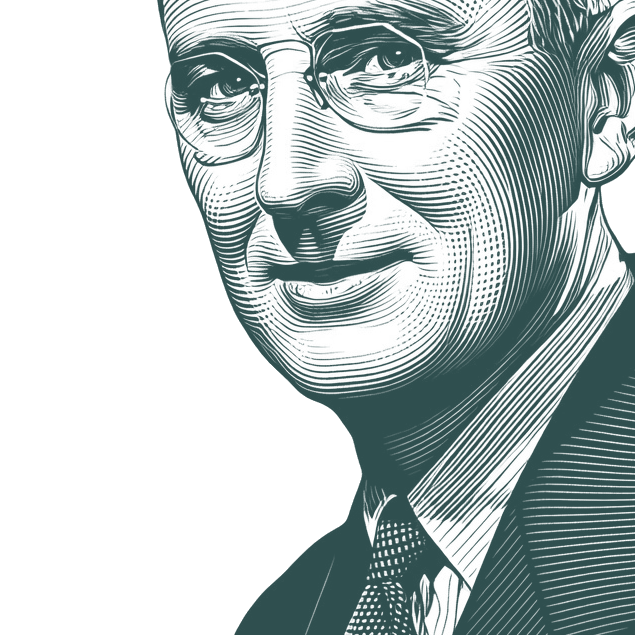
I would rather walk the sidewalk in front of a person's office for two hours before an interview than step into that office without a perfectly clear… - Dale Carnegie
""
I would rather walk the sidewalk in front of a person's office for two hours before an interview than step into that office without a perfectly clear idea of what I was going to say and what that person — from my knowledge of his or her interests and motives — was likely to answer.
English
Collect this quote
About
Dale Carnegie
Dale Harbison Carnegie [originally Carnagey until 1919] (November 24, 1888 – November 1, 1955) was an American writer, lecturer and the developer of famous courses in self-improvement, salesmanship, corporate training, public speaking and interpersonal skills. Born in poverty on a farm in Missouri, he was the author of How to Win Friends and Influence People, first published in 1936, a massive bestseller that remains popular today. He also wrote a biography of Abraham Lincoln, entitled Lincoln the Unknown, as well as several other books.
For every ailment under the sun, There is a remedy, or there is none; If there be one, try to find it; If there be none, never mind it.
The reason why rivers and seas receive the homage of a hundred mountain streams is that they keep below them. Thus they are able to reign over all the mountain streams. So the sage, wishing to be above men, putteth himself below them; wishing to be before them, he putteth himself behind them. Thus, though his place be above men, they do not feel his weight; though his place be before them, they do not count it an injury.
Zoroaster taught it to his followers in Persia twenty-five hundred years ago. Confucius preached it in China twenty-four centuries ago. Lao-tse, the founder of Taoism, taught it to his disciples in the Valley of the Han. Buddha preached it on the bank of the Holy Ganges five hundred years before Christ. The sacred books of Hinduism taught it a thousand years before that. Jesus taught it among the stony hills of Judea nineteen centuries ago. Jesus summed it up in one thought — probably the most important rule in the world: “Do unto others as you would have others do unto you.