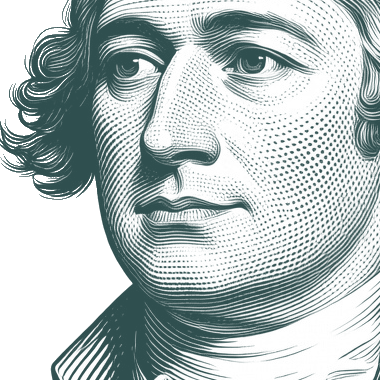
Men of this class, whether the favorites of a king or of a people, have in too many instances abused the confidence they possessed; and assuming the … - Alexander Hamilton
""
Men of this class, whether the favorites of a king or of a people, have in too many instances abused the confidence they possessed; and assuming the pretext of some public motive, have not scrupled to sacrifice the national tranquillity to personal advantage or personal gratification.
English
Collect this quote
About
Alexander Hamilton
Alexander Hamilton (11 January 1755 or 1757 – 12 July 1804) was a Founding Father of the United States, chief staff aide to General George Washington, one of the most influential interpreters and promoters of the U.S. Constitution, the founder of the nation's financial system, the founder of the Federalist Party, the world's first voter-based political party, the Father of the United States Coast Guard, and the founder of The New York Post.
Biography information from
Wikiquote·
Portrait adapted from
Wikimedia Commons, John Trumbull (Public domain / CC0)
Also Known As
Pen Names:
Publius
Alternative Names:
Hamilton
•
Alexander Hamilton, US Treasury secretary
•
A. Ham
Men of factious tempers, of local prejudices, or of sinister designs, may, by intrigue, by corruption, or by other means, first obtain the suffrages, and then betray the interests, of the people.
THE SECOND class of powers, lodged in the general government, consists of those which regulate the intercourse with foreign nations, to wit: to make treaties; to send and receive ambassadors, other public ministers, and consuls; to define and punish piracies and felonies committed on the high seas, and offenses against the law of nations; to regulate foreign commerce, including a power to prohibit, after the year 1808, the importation of slaves, and to lay an intermediate duty of ten dollars per head, as a discouragement to such importations.
Enhance Your Quote Experience
Enjoy ad-free browsing, unlimited collections, and advanced search features with Premium.