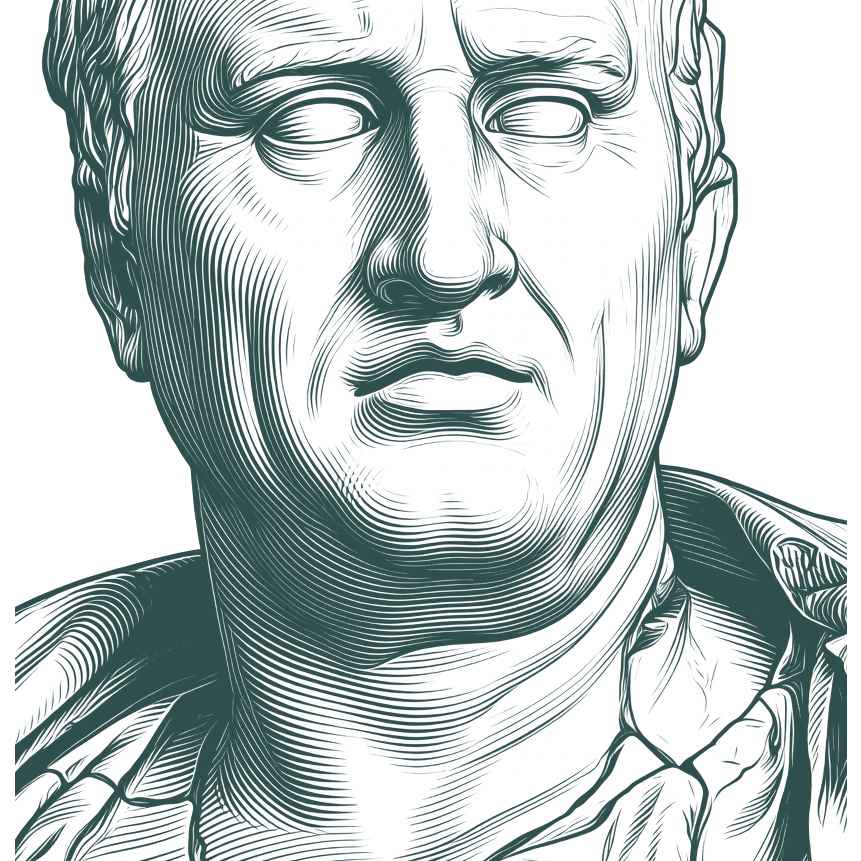
For while we are enclosed in these confinements of the body, we perform as a kind of duty the heavy task of necessity; for the soul from heaven has b… - Cicero
""
For while we are enclosed in these confinements of the body, we perform as a kind of duty the heavy task of necessity; for the soul from heaven has been cast down from its dwelling on high and sunk, as it were, into the earth, a place just the opposite to godlike nature and eternity. But I believe that the immortal gods have sown souls in human bodies so there might exist beings to guard the world and after contemplating the order of heaven, might imitate it by their moderation and steadfastness in life.
English
Collect this quote
About
Cicero
Marcus Tullius Cicero (3 January 106 BC – 7 December 43 BC), infrequently known by the anglicized name Tully in the Middle Ages and after, was a Roman philosopher, politician, lawyer, orator, political theorist, consul and constitutionalist. He came from a wealthy municipal family of the Roman equestrian order, and is widely considered one of Rome's greatest orators and prose stylists.
IT is alledged, that Memory fails in Old Age. That it does so, I freely grant; but then it is principally, where it has not been properly exercised; or with those who naturally have no Strength of Brain: For such as have, will pretty well retain it.
Quibus enim nihil est in ipsis opis ad bene beateque vivendum, eis omnis aetas gravis est; qui autem omnia bona a se ipsi petunt, eis nihil potest malum videri quod naturae necessitas afferat. quo in genere est in primis senectus, quam ut adipiscantur omnes optant, eandem accusant adeptam; tanta est stultitiae inconstantia atque perversitas. obrepere aiunt eam citius quam putassent. primum quis coegit eos falsum putare? qui enim citius adulescentiae senectus quam pueritiae adulescentia obrepit? deinde qui minus gravis esset eis senectus, si octingentesimum annum agerent, quam si octogesimum? praeterita enim aetas quamvis longa, cum effluxisset, nulla consolatione permulcere posset stultam senectutem.
ait enim declinare atomum sine causa; quo nihil turpius physico, quam fieri quicquam sine causa dicere, — et