Roman statesman, lawyer, orator, and philosopher (106–43 BC)
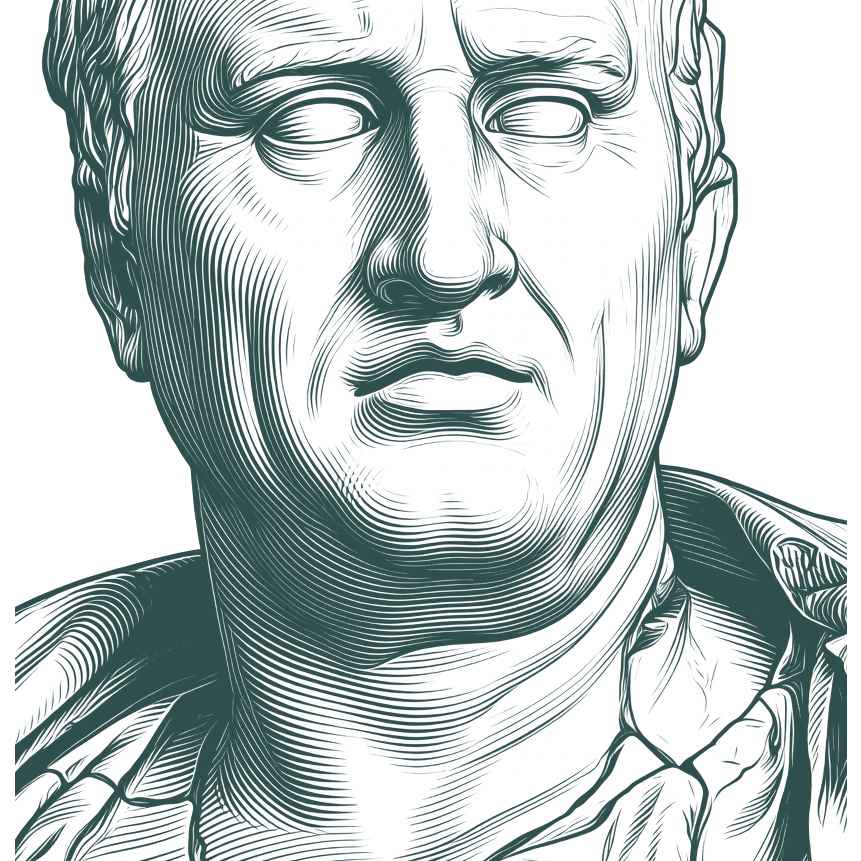
Marcus Tullius Cicero (3 January 106 BC – 7 December 43 BC), infrequently known by the anglicized name Tully in the Middle Ages and after, was a Roman philosopher, politician, lawyer, orator, political theorist, consul and constitutionalist. He came from a wealthy municipal family of the Roman equestrian order, and is widely considered one of Rome's greatest orators and prose stylists.
Bio from: Wikiquote (CC BY-SA 4.0) · Portrait adapted from: Wikimedia Commons, José Luiz (CC BY-SA)
From Wikidata (CC0)
Advanced Search Filters
Filter search results by source, date, and more with our premium search tools.
We must stand up against old age and make up for its drawbacks by taking pains. We must fight it as we should an illness. We must look after our health, use moderate exercise, take just enough food and drink to recruit, but not to overload, our strength. Nor is it the body alone that must be supported, but the intellect and soul much more.
"As for myself, I can only exhort you to look on Friendship as the most valuable of all human possessions, no other being equally suited to the moral nature of man, or so applicable to every state and circumstance, whether of prosperity or adversity, in which he can possibly be placed. But at the same time I lay it down as a fundamental axiom that "true Friendship can only subsist between those who are animated by the strictest principles of honour and virtue." When I say this, I would not be thought to adopt the sentiments of those speculative moralists who pretend that no man can justly be deemed virtuous who is not arrived at that state of absolute perfection which constitutes, according to their ideas, the character of genuine wisdom. This opinion may appear true, perhaps, in theory, but is altogether inapplicable to any useful purpose of society, as it supposes a degree of virtue to which no mortal was ever capable of rising."
Epicurus however is a more troublesome opponent, because he is a combination of two different sorts of pleasure, and because besides himself and his friends there have been so many later champions of his theory, which somehow or other enlists the support of that least competent but most powerful adherent, the general public.
"I conclude, then, that the plea of having acted in the interests of a friend is not a valid excuse for a wrong action. . . . We may then lay down this rule of friendship — neither ask nor consent to do what is wrong. For the plea "for friendship's sake" is a discreditable one, and not to be admitted for a moment."
Ought one to remain in one’s country when under a tyrant? If one’s country is under a tyrant ought one to labour at all hazards for the abolition of the tyranny, even at the risk of the total destruction of the city? Or ought we to be on our guard against the man attempting the abolition, lest he should rise too high himself?
Ought one to assist one’s country when under a tyrant by seizing opportunities and by argument rather than by war?
Is it acting like a good citizen to quit one’s country when under a tyrant for any other land, and there to remain quiet, or ought one to face any and every danger for liberty’s sake?
Ought one to wage war upon and besiege one’s native town, if it is under a tyrant?
Even if one does not approve an abolition of a tyranny by war, ought one still to enroll oneself in the ranks of the loyalists?
Ought one in politics to share the dangers of one’s benefactors and friends, even though one does not think their general policy to be wise?
Should a man who has done conspicuous services to his country, and on that very account has been shamefully treated and exposed to envy, voluntarily place himself in danger for his country, or may he be permitted at length to take thought for himself and those nearest and dearest to him, giving up all political struggles against the stronger party?
Enhance Your Quote Experience
Enjoy ad-free browsing, unlimited collections, and advanced search features with Premium.
Quibus enim nihil est in ipsis opis ad bene beateque vivendum, eis omnis aetas gravis est; qui autem omnia bona a se ipsi petunt, eis nihil potest malum videri quod naturae necessitas afferat. quo in genere est in primis senectus, quam ut adipiscantur omnes optant, eandem accusant adeptam; tanta est stultitiae inconstantia atque perversitas. obrepere aiunt eam citius quam putassent. primum quis coegit eos falsum putare? qui enim citius adulescentiae senectus quam pueritiae adulescentia obrepit? deinde qui minus gravis esset eis senectus, si octingentesimum annum agerent, quam si octogesimum? praeterita enim aetas quamvis longa, cum effluxisset, nulla consolatione permulcere posset stultam senectutem.