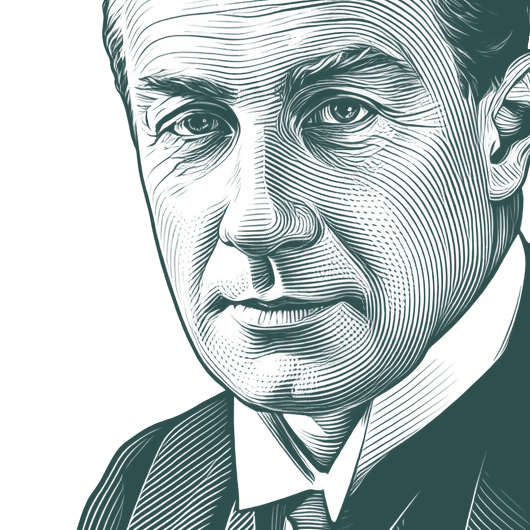
If there is anything...it is my training, which has given me, whether I can use it or not, a knowledge and a sympathy very difficult for any man to a… - Stanley Baldwin
""
If there is anything...it is my training, which has given me, whether I can use it or not, a knowledge and a sympathy very difficult for any man to attain who has had an exclusively political training I regard it as of the greatest value to myself that during the formative years of my life, and during the ten and twenty years when I first started work in the world, I worked in close contact with all classes of people in this country, and enjoyed, through no credit to myself, the goodwill which I have inherited from generations that have gone before me and left behind a name for honesty, fair play, right judgment, and kindliness to those with whom they worked. Through that, whether I succeed or not, I believe I have an understanding of the mind of the people of the country which I could have gained in no other way. It is through this that I have that ineradicable belief and faith in our people which sustains me through good times and evil, and it is because of this that I have every confidence that, whatever troubles may come to this country, or in this country at any time, the native strength and virtue of our people will overcome everything. There is only one thing which I feel is worth giving one's whole strength to, and that is the binding together of all classes of our people in an effort to make life in this country better in every sense of the word. That is the main end and object of my life in politics.
Stanley Baldwin, 1st Earl Baldwin of Bewdley KG PC (3 August 1867 – 14 December 1947) was Prime Minister of the United Kingdom on three separate occasions (1923–24, 1924–29 and 1935–37).
Portrait adapted from
Wikimedia Commons, Bain News Service (Public domain / CC0)
Also Known As
Alternative Names:
Sir Stanley Baldwin
•
Lord Baldwin
•
Stanley Baldwin, 1st Earl Baldwin
•
Stanley Baldwin, 1st Earl Baldwin of Bewdley
Rightly or wrongly I was convinced you could not deal with unemployment without a tariff. After the war, opinion was more fluid and open. On political grounds, the tariff issue had been dead for years and I felt it was the one issue which would pull the party together including the Lloyd George malcontents. The Goat [Lloyd George] was in America. He was on the water when I made the speech and the Liberals did not know what to say. I had information that he was going protectionist, and I had to get in quick. No truth that I was pushed by Amery and the cabal. I was loosely in the saddle and got them into line in the Cabinet. Dished the Goat, as otherwise he would have got the Party with Austen and F. E. and there would have been an end to the Tory Party as we know it. I shall not forget the surprise and delight of Amery. It was a long calculated and not a sudden dissolution. Bonar had no programme, and the only thing was to bring the tariff issue forward.
And so it is, seven years nearly after the War, that we yet see this prolonged and intensified depression, and this horrible figure of unemployment...We stand to-day at a point where, roughly speaking, one out of every ten of the insured population is out of work...But there is no direct remedy from the State alone. There can be no direct remedy by private men alone. Nothing can be done unless we can all pull together with a will. And I am—and I speak seriously—quite profoundly thankful that the Labour Party have been in office, and for this reason: that they now know that they, no more than any other Government, have been able to produce a panacea that would remedy unemployment. And in their hearts they must admit that they have no remedy which can be guaranteed to cure this disease and at the same time maintain unimpaired the international position and power of the British Empire.