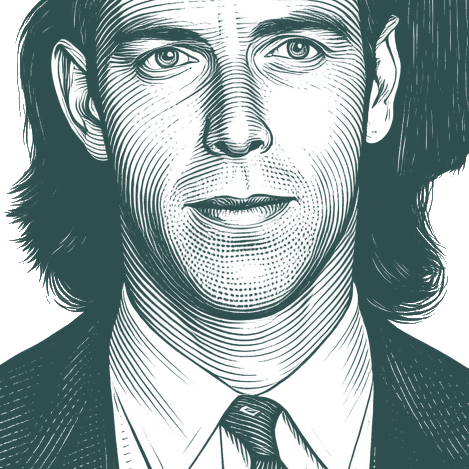
The capacity of the brain to forsee the future has much to do with the fear of death.
For when the body is worn out and the brain is tired, the whole… - Alan Watts
""
The capacity of the brain to forsee the future has much to do with the fear of death. For when the body is worn out and the brain is tired, the whole organism welcomes death. But it is difficult to understand how death can be welcome when you are young and strong, so that you come to regard it as a dread and terrible event. For the brain, in its immaterial way, looks into the future and conceives it a good to go on and on and on forever — not realizing that its own material would at last find the process intolerably tiresome. Not taking this into account, the brain fails to see that, being itself material and subject to change, its desires will change, and a time will come when death will be good. On a bright morning, after a good night’s rest, you do not want to go to sleep. But after a hard day’s work the sensation of dropping into unconsciousness is extraordinarily pleasant.
Alan Wilson Watts (6 January 1915 – 16 November 1973) was an English philosopher, writer, speaker, and expert in comparative religion.
Biography information from
Wikiquote·
Portrait adapted from
Wikimedia Commons, The University of Vermont Alumni Magazine vol. 39 no. 01, p. 22. (Public domain / CC0)
Also Known As
Alternative Names:
Alan Wilson Watts
•
Alan W. Watts
If Christianity is wine and Islam coffee, Buddhism is most certainly tea.
"We suffer from a hallucination, from a false and distorted sensation of our own existence as living organisms. Most of us have the sensation that "I myself" is a separate center of feeling and action, living inside and bounded by the physical body — a center which "confronts" an "external" world of people and things, making contact through the senses with a universe both alien and strange. Everyday figures of speech reflect this illusion. "I came into this world." "You must face reality." "The conquest of nature." This feeling of being lonely and very temporary visitors in the universe is in flat contradiction to everything known about man (and all other living organisms) in the sciences. We do not "come into" this world; we come out of it, as leaves from a tree. As the ocean "waves," the universe "peoples." Every individual is an expression of the whole realm of nature, a unique action of the total universe. This fact is rarely, if ever, experienced by most individuals. Even those who know it to be true in theory do not sense or feel it, but continue to be aware of themselves as isolated "egos" inside bags of skin."
PREMIUM FEATURE
Advanced Search Filters
Filter search results by source, date, and more with our premium search tools.
Sexuality is not a separate compartment of human life; it is a radiance pervading every human relationship, but assuming a particular intensity at certain points.