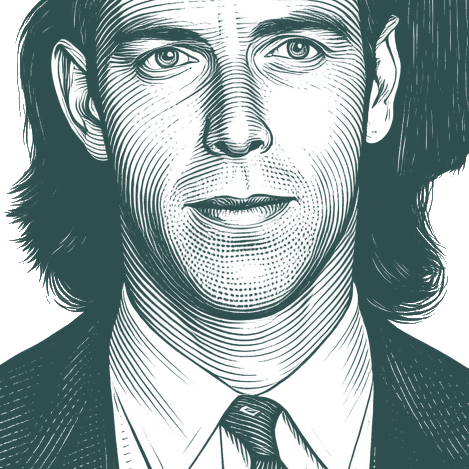
Alan Wilson Watts (6 January 1915 – 16 November 1973) was an English philosopher, writer, speaker, and expert in comparative religion.
Biography information from
Wikiquote·
Portrait adapted from
Wikimedia Commons, The University of Vermont Alumni Magazine vol. 39 no. 01, p. 22. (Public domain / CC0)
Also Known As
Alternative Names:
Alan Wilson Watts
•
Alan W. Watts
Portrait from Wikimedia Commons. Credit: The University of Vermont Alumni Magazine vol. 39 no. 01, p. 22.. Used under Public domain / CC0. Processed and styled by Quotewise.
Works in ChatGPT, Claude, or Any AI
Add semantic quote search to your AI assistant via MCP. One command setup.
Indeed, whoever imagines he has explained Zen has in fact only explained it away; it can no more be bound by a definition than the wind can be shut in a box without ceasing to be wind. Thus any attempt to write on Zen may seem an absurdity from the beginning, but that is only so if either reader or writer imagines that Zen can be contained in a set of ideas. A book about London is in no sense London itself, and no sane person would dream of thinking that it is. Yet apparently intelligent people often make the equally ridiculous mistake of identifying a philosophical system, a dogma, a creed, with Ultimate Truth, imagining that they have found that Truth embraced in a set of propositions which appeals to their reason.
But Taoism must on no account be understood as a revolution against convention, although it has sometimes been used as a pretext for revolution. Taoism is a way of liberation, which never comes by means of revolution, since it is notorious that most revolutions establish worse tyrannies than they destroy. To be free from convention is not to spurn it but not to be deceived by it. It is to be able to use it as an instrument instead of being used by it.
Try QuoteGPT
Chat naturally about what you need. Each answer links back to real quotes with citations.
"Nature appears to be a hierarchy of many grades, corresponding to what the scientist calls ''levels of magnification." Thus when we adjust our lenses to watch the individual cells of an organism we see only particular successes and failures, victories and defeats in what appears to be a ruthless ''dog-eat-dog'' battle. But when we change the level of magnification to observe the organism as a whole, we see that what was conflict at the lower level is harmony at the higher: that the health, the ongoing life of the organism is precisely the outcome of this microscopic turmoil.