Limited Time Offer
Premium members can get their quote collection automatically imported into their Quotewise collections.
" "Many of us learned that passivity lessened the possibility of attack.
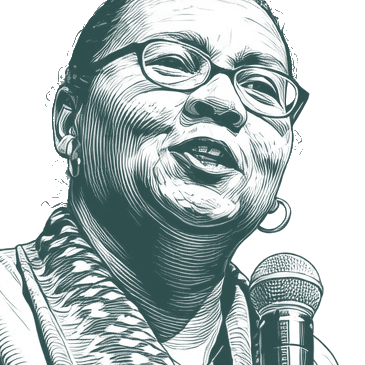
bell hooks (born Gloria Jean Watkins; September 25, 1952 – December 15, 2021), was an American university professor specializing in social criticism focused on groups distinguished by established differences in social power.
Biography information from Wikiquote
Premium members can get their quote collection automatically imported into their Quotewise collections.
Related quotes. More quotes will automatically load as you scroll down, or you can use the load more buttons.
Lying takes the form of mass media creating the myth that feminist movement has completely transformed society, so much so that the politics of patriarchal power have been inverted and that men, particularly white men, just like emasculated black men, have become the victims of dominating women. So, it goes, all men (especially black men) must pull together (as in the Clarence Thomas hearings) to support and reaffirm patriarchal domination. Add to this the widely held assumptions that blacks, other minorities, and white women are taking jobs from white men, and that people are poor and unemployed because they want to be, and it becomes most evident that part of our contemporary crisis is created by a lack of meaningful access to truth.
Enjoy ad-free browsing, unlimited collections, and advanced search features with Premium.
The understanding I had by age thirteen of patriarchal politics created in me expectations of the feminist movement that were quite different from those of young, middle class, white women. When I entered my first women's studies class at Stanford University in the early 1970s, white women were revelling in the joy of being together-to them it was an important, momentous occasion. I had not known a life where women had not been together, where women had not helped, protected, and loved one another deeply. I had not known white women who were ignorant of the impact of race and class on their social status and consciousness (Southern white women often have a more realistic perspective on racism and classism than white women in other areas of the United States.) I did not feel sympathetic to white peers who maintained that I could not expect them to have knowledge of or understand the life experiences of black women. Despite my background (living in racially segregated communities) I knew about the lives of white women, and certainly no white women lived in our neighborhood, attended our schools, or worked in our homes When I participated in feminist groups, I found that white women adopted a condescending attitude towards me and other non-white participants. The condescension they directed at black women was one of the means they employed to remind us that the women's movement was "theirs"-that we were able to participate because they allowed it, even encouraged it; after all, we were needed to legitimate the process. They did not see us as equals. And though they expected us to provide first hand accounts of black experience, they felt it was their role to decide if these experiences were authentic. Frequently, college-educated black women (even those from poor and working class backgrounds) were dismissed as mere imitators. Our presence in movement activities did not count, as white women were convinced that "real" blackness meant speaking the patois of poor black people, being uneducated, streetwise, and a variety of other stereotypes. If we dared to criticize the movement or to assume responsibility for reshaping feminist ideas and introducing new ideas, our voices were tuned out, dismissed, silenced. We could be heard only if our statements echoed the sentiments of the dominant discourse.