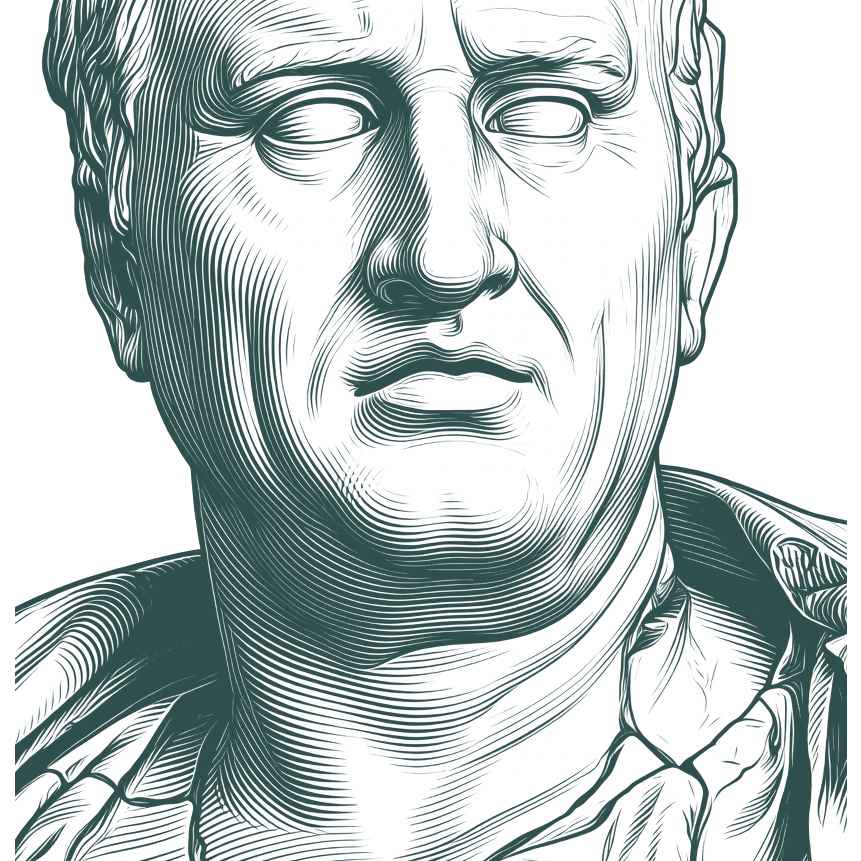
For of what value is their vaunted 'freedom from care'? In appearance it is indeed an alluring thing, but in reality often to be shunned. For it is i… - Cicero
""
For of what value is their vaunted 'freedom from care'? In appearance it is indeed an alluring thing, but in reality often to be shunned. For it is inconsistent not to undertake any honourable business or course of conduct, or to lay it aside when undertaken, in order to avoid anxiety. Nay, if we continually flee from trouble, we must also flee from Virtue, who necessarily meets with some trouble in rejecting and loathing things contrary to herself, as when kindness rejects ill-will, temperance lust, and bravery cowardice. And so you may see that it is the just who are most pained at injustice, the brave at cowardice, the self-restrained at profligacy. It is, therefore, characteristic of the well-ordered mind both to rejoice at good deeds and to be pained at the reverse.
English
Collect this quote
About
Cicero
Marcus Tullius Cicero (3 January 106 BC – 7 December 43 BC), infrequently known by the anglicized name Tully in the Middle Ages and after, was a Roman philosopher, politician, lawyer, orator, political theorist, consul and constitutionalist. He came from a wealthy municipal family of the Roman equestrian order, and is widely considered one of Rome's greatest orators and prose stylists.
Art is born of the observation and investigation of nature.
Whether it is a natural instinct or a mere illusion, I can’t say; but one’s emotions are more strongly aroused by seeing the places that tradition records to have been the favourite resort of men of note in former days, than by hearing about their deeds or reading their writings. My own feelings at the present moment are a case in point. I am reminded of Plato, the first philosopher, so we are told, that made a practice of holding discussions in this place;
Try QuoteGPT
Chat naturally about what you need. Each answer links back to real quotes with citations.
It is not merriment and wantonness, nor laughter or jesting, the comrade of frivolity, that make men happy; those are happy, often in sadness, whose wills are strong and true.