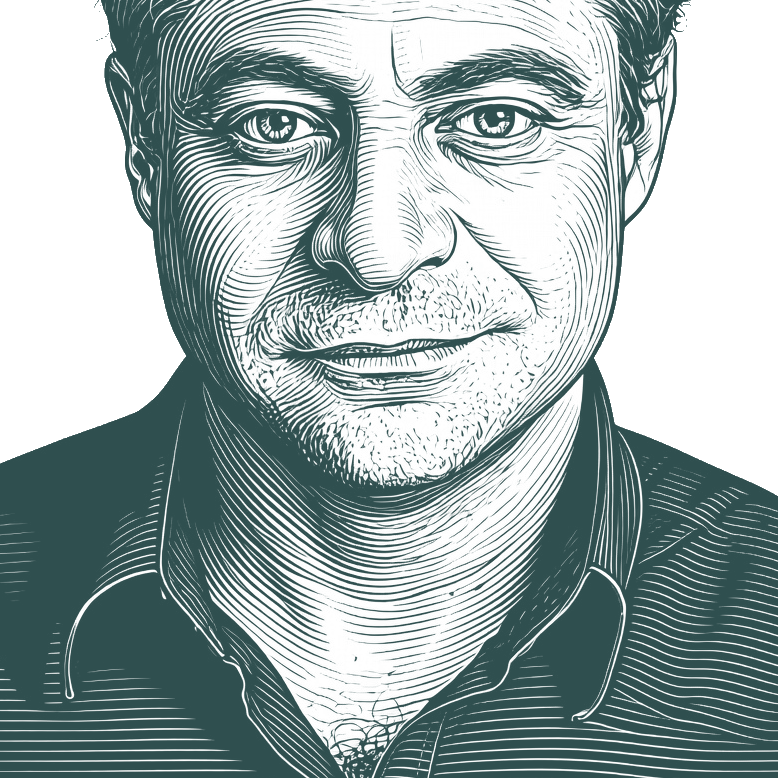
It's so hard to catch something that everybody already knows is hot," says Bezos. "Instead, position yourself and wait for the wave to come to you. S… - Peter Diamandis
""
It's so hard to catch something that everybody already knows is hot," says Bezos. "Instead, position yourself and wait for the wave to come to you. So then you ask, Position myself where? Position yourself with something that captures your curiosity, something that you're missionary about. I tell people that when we acquire companies, I'm always trying to figure out: Is this person who leads this company a missionary or a mercenary? The missionary is building the product and building the service because they love the customer, because they love the product, because they love the service. The mercenary is building the product or service so that they can flip the company and make money. One of the great paradoxes is that the missionaries end up making more money than the mercenaries anyway. And so pick something that you are passionate about, that's my number one piece of advice.
English
Collect this quote
About
Peter Diamandis
Peter H. Diamandis (born May 20, 1961) is an American engineer, physician, and entrepreneur. He is best known as the founder and chairman of the XPRIZE Foundation, and the cofounder and executive chairman of Singularity University. He is also cofounder and former CEO of the Zero Gravity Corporation, cofounder and vice chairman of Space Adventures Ltd., founder and chairman of the Rocket Racing League, cofounder of the International Space University, cofounder of Planetary Resources, cofounder of Celularity, founder of Students for the Exploration and Development of Space, and vice chairman and cofounder of Human Longevity, Inc.
Today mammography requires an expensive, large, stationary machine that takes a crude, two-dimensional picture. But imagine a 'bra' that has tiny X-ray pixel emitters on the top and X-ray sensors on the bottom. It's self-contained, self-powered, has a 3G or Wi-Fi-enabled network, and can be shipped to a patient in a FedEx box. The patient puts on the bra, pushes a button, and the doctor comes online and starts talking: 'Hi. All set to take your mammogram? Hold still.' The X-ray pixels fire, the detectors assemble and transmit the image, and the doctor reads it on the spot. The patient ships back the package, and she's done. With little time and little money.
Thousands of years ago, it was only kings, pharaohs, and emperors who had the ability to solve large-scale problems. Hundreds of years ago, this power expanded to the industrialists who built our transportation systems and financial institutions. But today, the ability to solve such problems has been thoroughly democratized. Right now, and for the first time ever, a passionate and committed individual has access to the technology, minds, and capital required to take on any challenge. Even better, that individual has good reason to take on such challenges. As we will soon see, the world's biggest problems are now the world's biggest business opportunities. This means, for exponential entrepreneurs, finding a significant challenge is a meaningful road to wealth. Ultimately, as I teach at Singularity University (much more on this later), the best way to become a billionaire is to solve a billion-person problem.
Unlimited Quote Collections
Organize your favorite quotes without limits. Create themed collections for every occasion with Premium.
Three hundred years ago, 2 percent of the world’s population lived in cities. Two hundred years ago, it was 10 percent. But the Industrial Revolution’s steam-powered punch forever altered those numbers. Between 1870 and 1920, 11 million Americans left the country for the city. In Europe, 25 million more crossed an ocean to settle, predominantly, in US cities. By 1900, 40 percent of the United States had urbanized. By 1950, it was 50 percent. By the turn of the millennium, 80 percent.