Some Indian scholars impute to the AIT critics motives or presuppositions which themselves imply the AIT, and which exist only in the eye of the beho… - Koenraad Elst
""
Some Indian scholars impute to the AIT critics motives or presuppositions which themselves imply the AIT, and which exist only in the eye of the beholder, meaning the AIT believer.
English
Collect this quote
About
Koenraad Elst
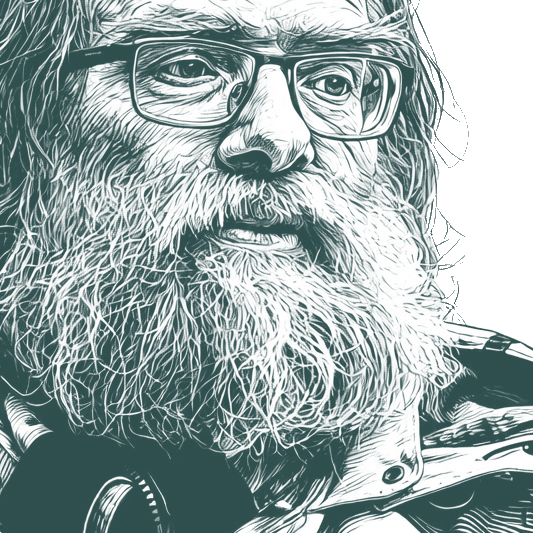
Koenraad Elst (born 7 August 1959) is a Flemish right wing Hindutva author, known primarily for his support of the Out of India theory and the Hindutva movement. Scholars have accused him of harboring Islamophobia.
The foreign press has not added any extra facts or perspective to the reporting on Ayodhya. It has mostly copied the bias of the Indian press. Time Magazine gave a not too unbalanced report, but quoted two of the JNU historians without telling its readers that these are not neutral academics but highly involved parties in the controversy.
Ostensibly the hymn is from the final stage of Rig-Vedic composition, shortly before Veda-Vyasa’s final editing of the hymns into the fully-formed Vedas. It soon became the Vedic bedrock of varna doctrine and gets reproduced or quoted to that effect in younger Vedic writings, including the Atharva & Yajur Veda (so, there also interpolations?), the Panchavimsha Brahmana, Taittitiya Aranyaka, Mahabharata and Bhagavata Purana.
Works in ChatGPT, Claude, or Any AI
Add semantic quote search to your AI assistant via MCP. One command setup.
When we compare the literature on the Shoah, the mass killing of Jews by the Nazis, with that on the mass killing of Hindus during and after the Partition of India, we find that the former is of immense magnitude, filling while libraries at specialized institutes, the latter quite the opposite. ... By contrast, literature on Partition is marginal and can hardly fill a single bookshelf. Scholarly studies on the genocidal waves characterising the unequal coexistence of Hindus and Muslims in East Bengal are extremely few, as are those on the Partition massacres in Punjab in 1947. (Preface)