I could quote almost all the ultimatums given by Hitler to countries that he invaded where he used exactly the same kind of language as the Prime Min… - Aneurin Bevan
""
I could quote almost all the ultimatums given by Hitler to countries that he invaded where he used exactly the same kind of language as the Prime Minister used the other day. The same language was used to Norway. ... We have only to substitute Egypt for Norway, because what did the right hon. Gentleman say? He said that he expected the Egyptian Government to peacefully permit the re-occupation of bases on the [Suez] Canal by the British Forces, and if they resisted they would be overcome with all necessary force. That is exactly what he said. Quite honestly, this is the language of the bully. There is no semblance of legal justification behind it.
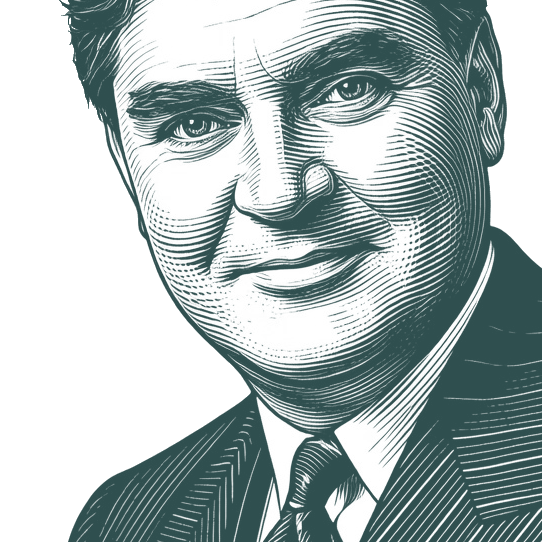
Aneurin Bevan (15 November 1897 – 6 July 1960) was a Welsh Labour Party politician who is best known for overseeing the creation of the National Health Service in the Labour government after World War II. Bevan, a left-winger, was intermittently in trouble with the Labour leadership; in the 1950s he astonished his supporters by opposing unilateral nuclear disarmament. He overcame a speech impediment and was regarded as one of the most eloquent public speakers of his day.
Portrait adapted from
Wikimedia Commons, Howard Coster (Public domain / CC0)
The issue therefore in a capitalist democracy resolves itself into this: either poverty will use democracy to win the struggle against property, or property, in fear of poverty, will destroy democracy.
There are many reasons why capitalist society does not command the assent of the masses. There is to begin with the sense of injustice arising from gross inequalities. This is a fertile source of discontent and will always render capitalist society unstable. But I do not consider this by itself as fatal to the existing order. There have been inequalities throughout the history of mankind, but they have not always proved incompatible with a certain degree of social stability. Complete equality is a motive that has never moved large masses for any decisive length of time. It has inspired sects and special Orders but it does not appear to be a condition congenial to normal living. There are probably causes deep in the human psyche to explain this, but they lie outside the province of this book. A sense of injustice does not derive solely from the existence of inequality. It arises from the belief that the inequality is capricious, unsanctioned by usage and, most important of all, senseless.
The liberal never knew what kind of society he intended until he had, in fact, made it. If we, on the other hand, accept the obligation of planning the direction of economic activity, then we accept with it the burden of deciding who and what must first be served. ... This is the complex answer to those who think socialism is merely a matter of appetite. On the contrary, it is the first time in human history that mankind will have accepted the obligation of free collective moral choice as the ultimate arbiter in social affairs. This, in truth, is the People's Coming of Age.