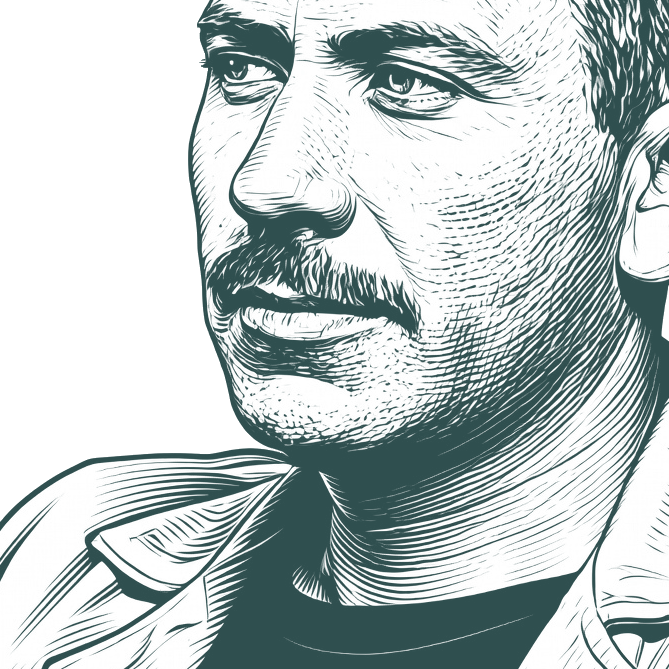
John Ernst Steinbeck Jr. (27 February 1902 – 20 December 1968) was an American writer. A recipient of the Nobel Prize for Literature in 1962, his works include the novella Of Mice and Men (1937) and the novel The Grapes of Wrath (1939, Pulitzer Prize for Fiction, 1940), both of which examine the lives of the working class and migrant workers during the Great Depression.
Biography information from
Wikiquote·
Portrait adapted from
Wikimedia Commons, McFadden Publications, Inc.; no photographer credited; photo likely the work of Sonya Noskowiak, as Steinbeck is wearing the same clothes from her 1935 studio session that produced the work shown here: https://www.si.edu/object/npg_NPG.2006.74 (Public domain / CC0)
Also Known As
Birth Name:
Jeffery Ernest Steinbeck
Alternative Names:
John Ernst Steinbeck, Jr.
•
John Ernst Steinbeck
•
John Ernest Steinbeck
•
John Ernst Steinbeck Jr
•
Steinbeck
Portrait from Wikimedia Commons. Credit: McFadden Publications, Inc.; no photographer credited; photo likely the work of Sonya Noskowiak, as Steinbeck is wearing the same clothes from her 1935 studio session that produced the work shown here: https://www.si.edu/object/npg_NPG.2006.74. Used under Public domain / CC0. Processed and styled by Quotewise.
Enhance Your Quote Experience
Enjoy ad-free browsing, unlimited collections, and advanced search features with Premium.
Mr. Trask, do you think the thoughts of people suddenly become important at a given age? Do you have sharper feelings or clearer thoughts now than when you were ten? Do you see as well, hear as well, taste as vitally?
The ways of sin are curious . . . I guess if a man had to shuck off everything he had, inside and out, he'd manage to hide a few little sins somewhere for his own discomfort. They're the last things we'll give up.
Sometimes in the summer evenings they walked up the hill to watch the afterglow clinging to the tops of the western mountains and to feel the breeze drawn into the valley by the rising day-heated air. Usually they stood silently for a while and breathed in peacefulness. Since both were shy they never talked about themselves. Neither knew about the other at all.