"Thoughts that have important consequences are always simple. All my thinking could be summed up with these words: "Since corrupt people unite amongs… - Leo Tolstoy
"Thoughts that have important consequences are always simple. All my thinking could be summed up with these words: "Since corrupt people unite amongst themselves to constitute a force, then honest people must do the same." It's as simple as that."
English
Collect this quote
About
Leo Tolstoy
Lev Nikolayevitch Tolstoy [Ле́в Никола́евич Толсто́й, usually rendered Leo Tolstoy, or sometimes Tolstoi] (9 September 1828 – 20 November 1910) was a Russian writer, philosopher and social activist (social critic), whose novels War and Peace and Anna Karenina are internationally praised classics of world literature. He was a major influence on the development of Christian anarchism and pacifism, contributing to such nonviolent resistance movements as those of Mahatma Gandhi, Martin Luther King, Jr., and James Bevel.
Biography information from
Wikiquote·
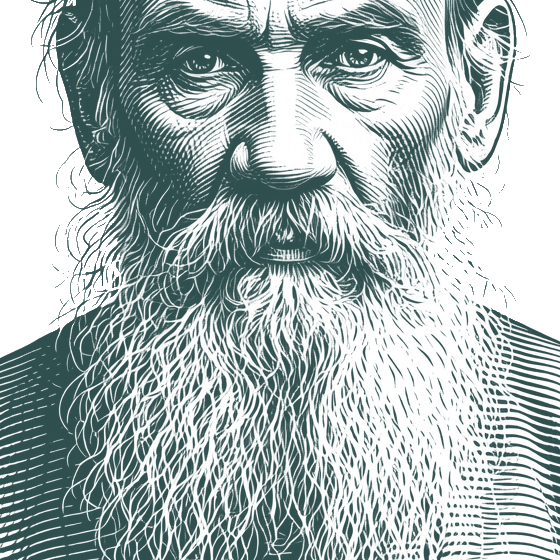
Portrait adapted from
Wikimedia Commons, Sergei Prokudin-Gorskii (Public domain / CC0)
Also Known As
Pen Names:
Л. Н. Т.
•
Л. Н.
Birth Name:
Lev Nikolayevich Tolstoy
Native Name:
Лев Никола́евич Толсто́й
Alternative Names:
Count Lev Nikolayevich Tolstoy
•
Tolstoy, Leo, graf, 1828-1910
•
Tolstoĭ, Lev Nikolaevich, graf, 1828-1910
•
Lev Nikolayevich Tolstoĭ
•
Leo Tolstoi
•
Tolstoĭ, Lev Nikolaevich, graf
•
Tolstoy, Leo, graf
I know now that people only seem to live when they care only for themselves, and that it is by love for others that they really live. He who has Love has God in him, and is in God - - because God is Love.
The question of how things will settle down is the only important question...
Limited Time Offer
Premium members can get their quote collection automatically imported into their Quotewise collections.