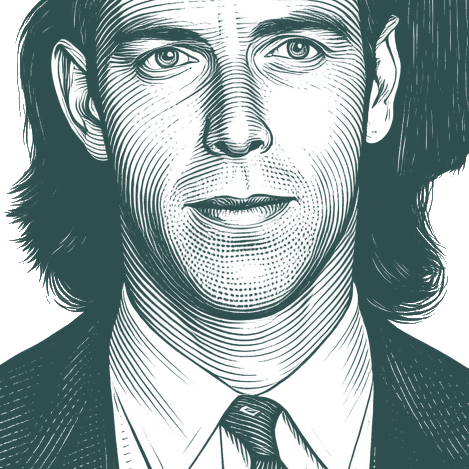
Alan Wilson Watts (6 January 1915 – 16 November 1973) was an English philosopher, writer, speaker, and expert in comparative religion.
Biography information from
Wikiquote·
Portrait adapted from
Wikimedia Commons, The University of Vermont Alumni Magazine vol. 39 no. 01, p. 22. (Public domain / CC0)
Also Known As
Alternative Names:
Alan Wilson Watts
•
Alan W. Watts
Portrait from Wikimedia Commons. Credit: The University of Vermont Alumni Magazine vol. 39 no. 01, p. 22.. Used under Public domain / CC0. Processed and styled by Quotewise.
Go Premium
Support Quotewise while enjoying an ad-free experience and premium features.
In other words, you have been hypnotized or conditioned by an educational processing-system arranged in grades or steps, supposedly leading to some ultimate Success. First nursery school or kindergarten, then the grades or forms of elementary school, preparing you for the great moment of secondary school! But then more steps, up and up to the coveted goal of the university. Here, if you are clever, you can stay on indefinitely by getting into graduate school and becoming a permanent student. Otherwise, you are headed step by step for the great Outside World of family-raising, business, and profession. Yet graduation day is a very temporary fulfillment, for with your first sales-promotion meeting you are back in the same old system, being urged to make that quota (and if you do, they’ll give you a higher quota) and so progress up the ladder to sales manager, vice-president, and, at last, president of your own show (about forty to forty-five years old). In the meantime, the insurance and investment people have been interesting you in plans for Retirement — that really ultimate goal of being able to sit back and enjoy the fruits of all your labors. But when that day comes, your anxieties and exertions will have left you with a weak heart, false teeth, prostate trouble, sexual impotence, fuzzy eyesight, and a vile digestion.
When Lao-tzu said that mui, doing nothing, was the secret of harmony with the Tao, he really meant it. But what he meant by it must be distinguished very carefully from two other courses which sound quite different from one another, though they are really the same. The first course, I will call the way of deliberate imitation. This is to suppose that we actually know what the sane and natural way of living is, to embody it in laws and principles, techniques and ideals, and then try by a deliberate effort of imitation to follow them. This leads to all the contradictions with which we are so familiar, the contradiction of man bawling himself out — as well as up — for not doing what he tells himself to do. The second, and seemingly opposed course, I will call the way of deliberate relaxation, the way of “to hell with it all.” This is to try not to control oneself, to attempt to relax one’s mind and let it think whatever it wants, to set out to accept one’s self as it is without making any effort to change it. This leads to a vast, sloppy, disorganized mess, or to a kind of compulsive stillness, or sometimes to an equally compulsive psychological diarrhea. Both of these courses are far short of the real mui, of profound and radical nondoing. What brings them to the same thing is that, in their different ways, the two courses had a result in mind. They consisted equally in something done, or not done, to get to a goal. The goal in question was some sort of image, some mental picture, some vague feeling, of an ideal, of a state of accord with the Tao, of harmony with the Way of Nature.
PREMIUM FEATURE
Advanced Search Filters
Filter search results by source, date, and more with our premium search tools.
In the widest sense of the word, to name is to interpret experience by the past, to translate it into terms of memory, to bind the unknown into the system of the known. Civilized man knows of hardly any other way of understanding things. Everybody, everything, has to have its label, its number, certificate, registration, classification. What is not classified is irregular, unpredictable, and dangerous. Without passport, birth certificate, or membership in some nation, one’s existence is not recognized.