The understanding I had by age thirteen of patriarchal politics created in me expectations of the feminist movement that were quite different from th… - bell hooks
""
The understanding I had by age thirteen of patriarchal politics created in me expectations of the feminist movement that were quite different from those of young, middle class, white women. When I entered my first women's studies class at Stanford University in the early 1970s, white women were revelling in the joy of being together-to them it was an important, momentous occasion. I had not known a life where women had not been together, where women had not helped, protected, and loved one another deeply. I had not known white women who were ignorant of the impact of race and class on their social status and consciousness (Southern white women often have a more realistic perspective on racism and classism than white women in other areas of the United States.) I did not feel sympathetic to white peers who maintained that I could not expect them to have knowledge of or understand the life experiences of black women. Despite my background (living in racially segregated communities) I knew about the lives of white women, and certainly no white women lived in our neighborhood, attended our schools, or worked in our homes When I participated in feminist groups, I found that white women adopted a condescending attitude towards me and other non-white participants. The condescension they directed at black women was one of the means they employed to remind us that the women's movement was "theirs"-that we were able to participate because they allowed it, even encouraged it; after all, we were needed to legitimate the process. They did not see us as equals. And though they expected us to provide first hand accounts of black experience, they felt it was their role to decide if these experiences were authentic. Frequently, college-educated black women (even those from poor and working class backgrounds) were dismissed as mere imitators. Our presence in movement activities did not count, as white women were convinced that "real" blackness meant speaking the patois of poor black people, being uneducated, streetwise, and a variety of other stereotypes. If we dared to criticize the movement or to assume responsibility for reshaping feminist ideas and introducing new ideas, our voices were tuned out, dismissed, silenced. We could be heard only if our statements echoed the sentiments of the dominant discourse.
English
Collect this quote
About
bell hooks
bell hooks (born Gloria Jean Watkins; September 25, 1952 – December 15, 2021), was an American university professor specializing in social criticism focused on groups distinguished by established differences in social power.
Biography information from
Wikiquote·
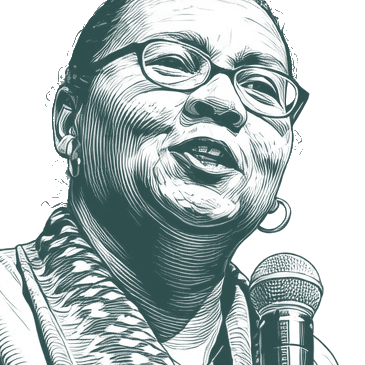
Portrait adapted from
Wikimedia Commons, Cmongirl (Public domain / CC0)
The function of art is to do more than tell it like it is-it’s to imagine what is possible.
Many people want love to function like a drug, giving them an immediate and sustained high. They want to do nothing, just passively receive the good feeling. In patriarchal culture men are especially inclined to see love as something they should receive without expending effort. More often than not they do not want to do the work that love demands. When the practice of love invites us to enter a place of potential bliss that is at the same time a place of critical awakening and pain, many of us turn our backs on love.
PREMIUM FEATURE
Advanced Search Filters
Filter search results by source, date, and more with our premium search tools.
Not all women, in fact, very few, have had the good fortune to live and work among women and men actively involved in the . Many of us live in circumstances and environments where we must engage in feminist struggle alone, with only occasional support and affirmation.