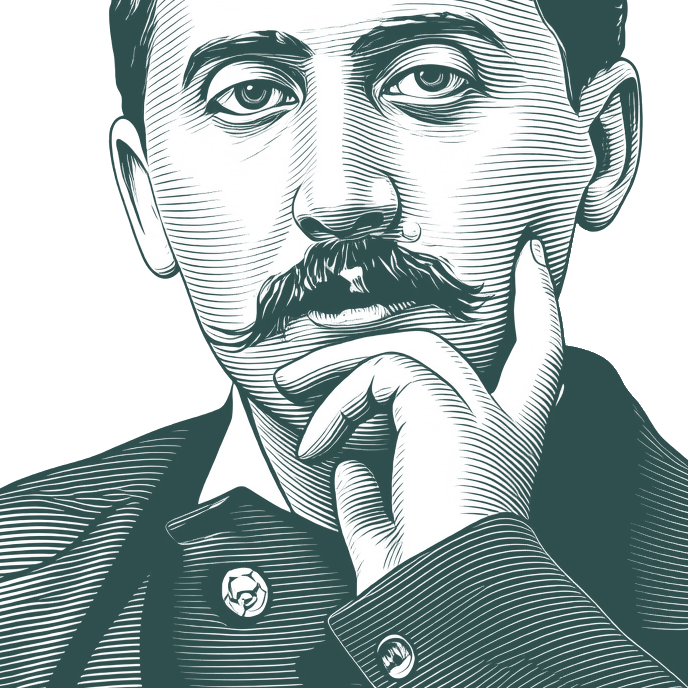
آموخت که آدم به غیبت عادت می­کند و این عادت به نبودن عزیزان از نبودنشان ناگوارتر است. - Marcel Proust

" "

آموخت که آدم به غیبت عادت می­کند و این عادت به نبودن عزیزان از نبودنشان ناگوارتر است.

Persian
Collect this quote

About Marcel Proust

Valentin Louis Georges Eugène Marcel Proust (10 July 1871 – 18 November 1922) was a French novelist, essayist and critic.

Biography information from Wikiquote

Also Known As

Alternative Names: Valentin Louis Georges Eugène Marcel Proust Proust Valentin Louis Georges Eugéne Marcel Proust Valentin-Louis-Georges-Eugéne-Marcel Proust Valentin Louis Georges Eugene Marcel Proust Valentin-Louis-Georges-Eugene-Marcel Proust Bernard d'Algouvres Valentin-Louis-Georges-Eugène-Marcel Proust
PREMIUM FEATURE
Advanced Search Filters

Filter search results by source, date, and more with our premium search tools.

Related quotes. More quotes will automatically load as you scroll down, or you can use the load more buttons.

Additional quotes by Marcel Proust

الحب هو المسافة التي نقطعها خلال وقت يقاس بوحدة القلب.

...infirmity alone makes us take notice and learn, and enables us to analyse mechanisms of which otherwise we should know nothing. A man who falls straight into bed night after night, and ceases to live until the moment when he wakes and rises, will surely never dream of making, I don't say great discoveries, but even minor observations about sleep. He scarcely knows that he is asleep. A little insomnia is not without its value in making us appreciate sleep, in throwing a ray of light upon that darkness. An unfailing memory is not a very powerful incentive to the study of the phenomena of memory.

Enhance Your Quote Experience

Enjoy ad-free browsing, unlimited collections, and advanced search features with Premium.

A woman sees herself dying, in these cases not at the actual moment of death but months, sometimes years before, when death has hideously come to dwell in her. The sufferer makes the acquaintance of the stranger whom she hears coming and going in her brain. She does not know him by sight, it is true, but from the sounds which she hears him regularly make she can form an idea of his habits. Is he a criminal? One morning, she can no longer hear him. He has gone. Ah! If it were only for ever! In the evening he has returned. What are his plans? Her specialist, put to the question, like an adored mistress, replies with avowals that one day are believed, another day fail to convince her. Or rather it is not the mistress’s part but that of the servants one interrogates that the doctor plays. They are only third parties. The person whom we press for an answer, whom we suspect of being about to play us false, is life itself, and although we feel her to be no longer the same we believe in her still or at least remain undecided until the day on which she finally abandons us.

Loading...