Why d’you read then?”
“Partly for pleasure, and because it’s a habit and I’m just as uncomfortable if I don’t read as if I don’t smoke, and partly to… - William Somerset Maugham
""
Why d’you read then?” “Partly for pleasure, and because it’s a habit and I’m just as uncomfortable if I don’t read as if I don’t smoke, and partly to know myself. When I read a book I seem to read it with my eyes only, but now and then I come across a passage, perhaps only a phrase, which has a meaning for me, and it becomes part of me; I’ve got out of the book all that’s any use to me, and I can’t get anything more if I read it a dozen times. You see, it seems to me, one’s like a closed bud, and most of what one reads and does has no effect at all; but there are certain things that have a peculiar significance for one, and they open a petal; and the petals open one by one and at last the flower is there.
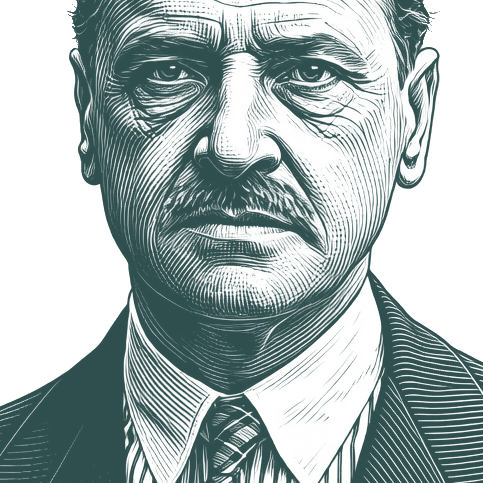
William Somerset Maugham (25 January 1874 – 16 December 1965) was an English playwright, novelist, and short story writer; often published as simply W. Somerset Maugham.
Biography information from
Wikiquote·
Portrait adapted from
Wikimedia Commons, Carl Van Vechten (1880 - 1964) (Public domain / CC0)
Also Known As
Alternative Names:
W. Somerset Maugham
•
Somerset Maugham
Related quotes. More quotes will automatically load as you scroll down, or you can use the load more buttons.
Shorter versions of this quote
When I read a book I seem to read it with my eyes only, but now and then I come across a passage, perhaps only a phrase, which has a meaning for me, and it becomes part of me.
Why do you read then?'
Partly for pleasure, because it's a habit and I'm just as uncomfortable if I don't read as if I don't smoke, and partly to know myself. When I read a book I seem to read it with my eyes only, but now and then I come across a passage, perhaps only a phrase, which has a meaning for me, and it becomes part of me; I've got out of the book all that's any use to me and I can't get anything more if I read it a dozen times. ...
His habit of reading isolated him: it became such a need that after being in company for some time he grew tired and restless; he was vain of the wider knowledge he had acquired from the perusal of so many books, his mind was alert, and he had not the skill to hide his contempt for his companions' stupidity. They complained that he was conceited; and, since he excelled only in matters which to them were unimportant, they asked satirically what he had to be conceited about. He was developing a sense of humour, and found that he had a knack of saying bitter things, which caught people on the raw; he said them because they amused him, hardly realising how much they hurt, and was much offended when he found that his victims regarded him with active dislike. The humiliations he suffered when he first went to school had caused in him a shrinking from his fellows which he could never entirely overcome; he remained shy and silent. But though he did everything to alienate the sympathy of other boys he longed with all his heart for the popularity which to some was so easily accorded. These from his distance he admired extravagantly; and though he was inclined to be more sarcastic with them than with others, though he made little jokes at their expense, he would have given anything to change places with them.
To eat well in England, you should have a breakfast three times a day.
The artist produces for the liberation of his soul. It is his nature to create as it is the nature of water to run down the hill.