Нельзя же сказать человеку: Ты можешь творить. Так давай, твори. Гораздо вернее подождать, пока он сам не скажет: Я могу творить, и я буду творить, х… - Isaac Asimov
""
Нельзя же сказать человеку: Ты можешь творить. Так давай, твори. Гораздо вернее подождать, пока он сам не скажет: Я могу творить, и я буду творить, хотите вы этого или нет.
Isaac Asimov (c. 2 January 1920 – 6 April 1992) was a Russian-born American biochemist who was a prolific writer of both fiction and non-fiction, his works include the Foundation series and I, Robot.
Biography information from
Wikiquote·
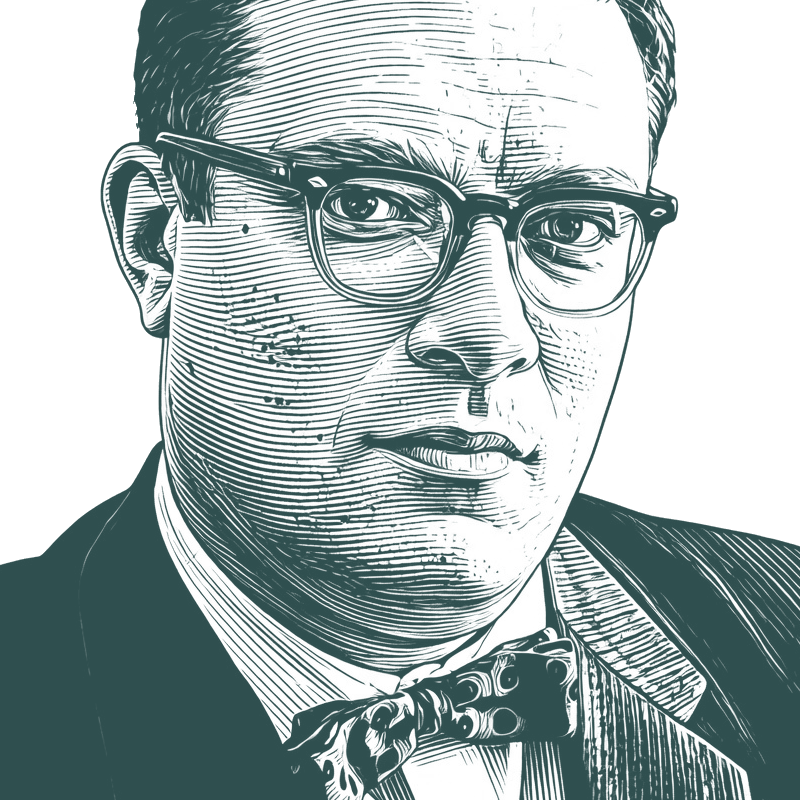
Portrait adapted from
Wikimedia Commons, Phillip Leonian [1] from New York World-Telegram & Sun.[2] (Public domain / CC0)
Also Known As
Alternative Names:
Isaak Osimov
•
Paul French
•
Asimov
•
Isaak Ozimov
•
Itzhak Ozimov
Portrait from Wikimedia Commons. Credit: Phillip Leonian [1] from New York World-Telegram & Sun.[2]. Used under Public domain / CC0. Processed and styled by Quotewise.
Works in ChatGPT, Claude, or Any AI
Add semantic quote search to your AI assistant via MCP. One command setup.
Every vice of the Empire has been repeated in the Foundation. Inertia! Our ruling class knows one law; no change. Despotism! They know one rule; force. Maldistribution! They know one desire; to hold what is theirs.
«Las Tres Leyes de la Robótica de Asimov» y son las siguientes: 1. Un robot no puede hacer daño a un ser humano, o, por medio de la inacción, permitir que un ser humano sea lesionado. 2. Un robot debe obedecer las órdenes recibidas por los seres humanos, excepto si estas órdenes entrasen en conflicto con la Primera Ley. 3. Un robot debe proteger su propia existencia en la medida en que esta protección no sea incompatible con la Primera y la Segunda Ley.
Try QuoteGPT
Chat naturally about what you need. Each answer links back to real quotes with citations.
The Executive Council of the Second Foundation was in session. To us they are merely voices. Neither the exact scene of the meeting nor the identity of those present are essential at this point. Nor, strictly speaking, can we even consider an exact reproduction of any part of the session — unless we wish to sacrifice completely even the minimum comprehensibility we have a right to expect.