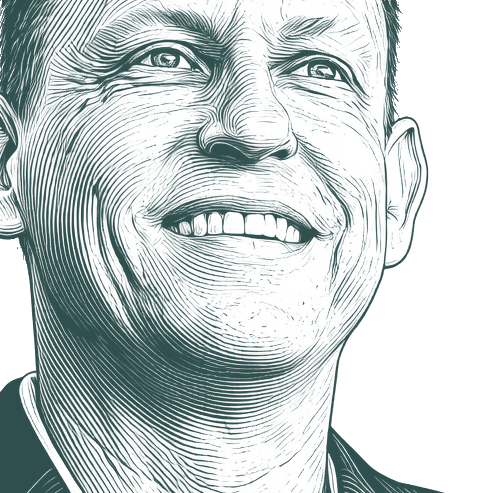
The strange history of the Baby Boom produced a generation of indefinite optimists so used to effortless progress that they feel entitled to it. Whet… - Peter Thiel
""
The strange history of the Baby Boom produced a generation of indefinite optimists so used to effortless progress that they feel entitled to it. Whether you were born in 1945 or 1950 or 1955, things got better every year for the first 18 years of your life, and it had nothing to do with you.
Peter Andreas Thiel (born 11 October 1967) is a German-American billionaire entrepreneur, hedge fund manager, venture capitalist, philanthropist, political activist, and author. A co-founder of PayPal, Palantir Technologies, and Founders Fund, he was the first outside investor in Facebook.
Confirm [the age of Apple is over]. We know what a smartphone looks like and does. It's not the fault of Tim Cook, but it's not an area where there will be any more innovation.
Max Levchin, cofundador de PayPal, dice que las startups deberían intentar que su equipo inicial fuera a nivel personal lo más parecido posible.
Works in ChatGPT, Claude, or Any AI
Add semantic quote search to your AI assistant via MCP. One command setup.
An extreme representative of this view is Ted Kaczynski, infamously known as the Unabomber. Kaczynski was a child prodigy who enrolled at Harvard at 16. He went on to get a PhD in math and become a professor at UC Berkeley. But you’ve only ever heard of him because of the 17-year terror campaign he waged with pipe bombs against professors, technologists, and businesspeople. In late 1995, the authorities didn’t know who or where the Unabomber was. The biggest clue was a 35,000-word manifesto that Kaczynski had written and anonymously mailed to the press. The FBI asked some prominent newspapers to publish it, hoping for a break in the case. It worked: Kaczynski’s brother recognized his writing style and turned him in. You might expect that writing style to have shown obvious signs of insanity, but the manifesto is eerily cogent. Kaczynski claimed that in order to be happy, every individual “needs to have goals whose attainment requires effort, and needs to succeed in attaining at least some of his goals.” He divided human goals into three groups: 1. Goals that can be satisfied with minimal effort; 2. Goals that can be satisfied with serious effort; and 3. Goals that cannot be satisfied, no matter how much effort one makes. This is the classic trichotomy of the easy, the hard, and the impossible. Kaczynski argued that modern people are depressed because all the world’s hard problems have already been solved. What’s left to do is either easy or impossible, and pursuing those tasks is deeply unsatisfying. What you can do, even a child can do; what you can’t do, even Einstein couldn’t have done. So Kaczynski’s idea was to destroy existing institutions, get rid of all technology, and let people start over and work on hard problems anew. Kaczynski’s methods were crazy, but his loss of faith in the technological frontier is all around us. Consider the trivial but revealing hallmarks of urban hipsterdom: faux vintage photography, the handlebar mustache, and vinyl record playe