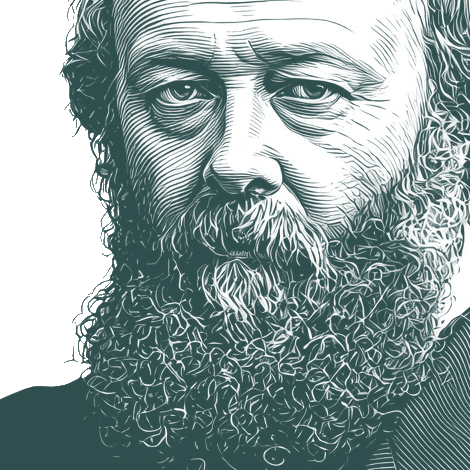
You may roughly divide the nations of the world as the living and the dying. On the one side you have great countries of enormous power growing in po… - Robert Gascoyne-Cecil, 3rd Marquess of Salisbury
""
You may roughly divide the nations of the world as the living and the dying. On the one side you have great countries of enormous power growing in power every year, growing in wealth, growing in dominion, growing in the perfection of their organization. Railways have given to them the power to concentrate upon any one point the whole military force of their population and to assemble armies of a magnitude and power never dreamt of in the generations that have gone by. Science has placed in the hands of those armies weapons ever growing in their efficacy of destruction, and, therefore, adding to the power—fearfully to the power—of those who have the opportunity of using them. ... [T]he weak States are becoming weaker and the strong States are becoming stronger. It needs no specialty of prophecy to point out to you what the inevitable result of that combined process must be. ... [T]he living nations will gradually encroach on the territory of the dying, and the seeds and causes of conflict amongst civilized nations will speedily appear.
About
Robert Gascoyne-Cecil, 3rd Marquess of Salisbury
Robert Arthur Talbot Gascoyne-Cecil, 3rd Marquess of Salisbury (3 February 1830 – 22 August 1903), styled Lord Robert Cecil before the death of his elder brother in 1865, and Viscount Cranborne from June 1865 until his father died in April 1868, was a three-time Prime Minister of the United Kingdom, during 1885–1886, 1886–1892 and 1895–1902.
Native Name:
Robert Gascoyne-Cecil, 3. Marquess of Salisbury
Alternative Names:
Robert Gascoyne-Cecil
•
Robert Arthur Talbot Gascoyne-Cecil
•
Robert Arthur Talbot Gascoyne-Cecil, 3rd Marquess of Salisbury
•
Robert Arthur Talbot Gascoigne Cecil, Marquis of Salisbury
Additional quotes by Robert Gascoyne-Cecil, 3rd Marquess of Salisbury
Englishmen are moderate, careful to avoid unnecessary offence, slow to come to a dangerous and violent conclusion, and tenacious and resolute when the conclusion has once been arrived at.
As long as I sit for a Conservative borough, I must continue to rank in the party and I will do what I can to promote good legislation. But I cannot look upon them as more likely to promote any cause I may have at heart than the other side. The suffrage is gone: they are lukewarm about the Church, and would no doubt give it up, as they have given up other things, for the sake of office. And beyond these two there is nothing, so far as I know, of which the Conservatives are in any special way the protectors.
PREMIUM FEATURE
Advanced Search Filters
Filter search results by source, date, and more with our premium search tools.