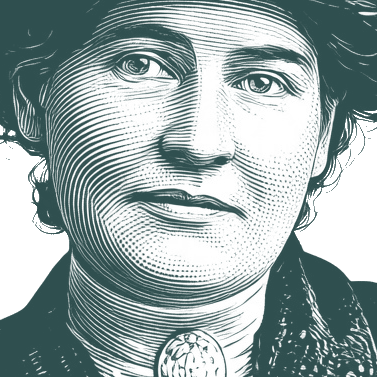
Portrait from Wikimedia Commons. Credit: Photographer: Aime Dupont Studio, New York. Used under Public domain / CC0. Processed and styled by Quotewise.
PREMIUM FEATURE
Advanced Search Filters
Filter search results by source, date, and more with our premium search tools.
During those last weeks of the Bishop's life he thought very little about death; it was the Past he was leaving. The future would take care of itself.
We were at last in Monte Cristo's country, fairly into the country of the fabulous, where extravagance ceases to exist because everything is extravagant, and where the wildest dreams come true.
Unlimited Quote Collections
Organize your favorite quotes without limits. Create themed collections for every occasion with Premium.
One might say that every fine story must leave in the mind of the sensitive reader an intangible residuum of pleasure; a cadence, a quality of voice that is exclusively the writer's own, individual, unique. A quality which one can remember without the volume at hand, can experience over and over again in the mind but can never absolutely define, as one can experience in memory a melody, or the summer perfume of a garden... It is a common fallacy that a writer, if he is talented enough, can achieve this poignant quality by improving upon his subject-matter, by using his "imagination" upon it and twisting it to suit his purpose. The truth is that by such a process (which is not imaginative at all!) he can at best produce only a brilliant sham, which, like a badly built and pretentious house, looks poor and shabby after a few years. If he achieves anything noble, anything enduring, it must be by giving himself absolutely to his material. And this gift of sympathy is his great gift; is the fine thing in him that alone can make his work fine. The artist spends a lifetime in pursuing the things that haunt him, in having his mind "teased" by them, in trying to get these conceptions down on paper exactly as they are to him and not in conventional poses supposed to reveal their character; trying this method and that, as a painter tries different lightings and different attitudes with his subject to catch the one that presents it more suggestively than any other. And at the end of a lifetime he emerges with much that is more or less happy experimenting, and comparatively little that is the very flower of himself and his genius.