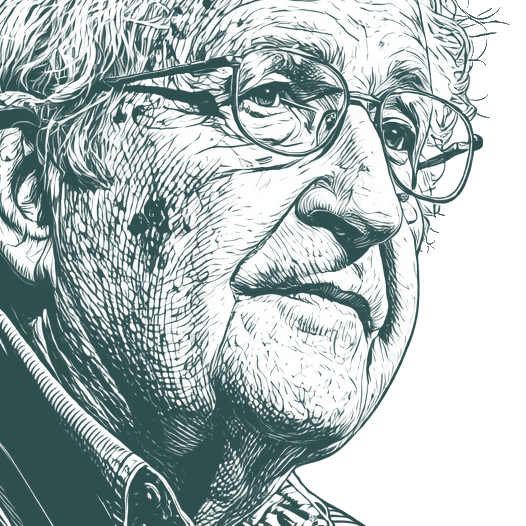
On September 1st of last year, the Soviet Union shot down Korean KAL 007, killing 269 people, and the immediate response here was that this proves th… - Noam Chomsky
""
On September 1st of last year, the Soviet Union shot down Korean KAL 007, killing 269 people, and the immediate response here was that this proves that the Russians are the most barbaric people since Attila the Hun or something, and therefore we have to step up the attack against Nicaragua, set in MX missiles, put Pershings in West Germany, and increase the military system.... The story was given unbelievable coverage. Not only the story, but the American government interpretation of it, which is roughly what I've just said, was given the kind of coverage that I doubt has ever been given to any story in history.... Right in the middle of all of this furor about the Korean airliner, on November 11th in fact, there was a 100 word item in the New York Times devoted to the interesting fact that UNITA—which is a group that we call "freedom fighters", supported by us and South Africa, in Angola—they took credit for shooting down a civilian Angolan jet, killing 126 people.... Now, under the very confused circumstances of KAL 007, if that was the worst atrocity in human history, well, what about the freedom fighters that we support along with South Africa, who did something much worse?
English
Collect this quote
About
Noam Chomsky
Avram Noam Chomsky (born 7 December 1928) is an American linguist, analytical philosopher, cognitive scientist, political analyst, human rights activist and anarcho-socialist.
Biography information from
Wikiquote·
Portrait adapted from
Wikimedia Commons, Augusto Starita / Ministerio de Cultura de la Nación (CC BY-SA)
The issue is whether we want to live in a free society or whether we want to live under what amounts to a form of self-imposed totalitarianism... admiring with awe the leader who saved them from destruction, while the educated masses goose-step on command and repeat the slogans they're supposed to repeat and the society deteriorates at home. We end up serving as a mercenary enforcer state, hoping that others are going to pay us to smash up the world.
...evidence-based approach, the U.S. negotiators argued, is interference with free markets, because corporations must have the right to deceive. [...] The claim itself is kind of amusing, I mean, even if you believe the free market rhetoric for a moment. The main purpose of advertising is to undermine markets. If you go to graduate school and you take a course in economics, you learn that markets are systems in which informed consumers make rational choices. That's what's so wonderful about it. But that's the last thing that the state corporate system wants. It is spending huge sums to prevent that, which brings us back to the viability of American democracy. For many years, elections here, election campaigns, have been run by the public relations industry and each time it's with increasing sophistication. And quite naturally, the industry uses the same technique to sell candidates that it uses to sell toothpaste or lifestyle drugs. The point is to undermine markets by projecting imagery to delude and suppressing information, and similarly, to undermine democracy by the same method, projecting imagery to delude and suppressing information. The candidates are trained, carefully trained, to project a certain image. Intellectuals like to make fun of George Bush's use of phrases like “misunderestimate,” and so on, but my strong suspicion is that he's trained to do that. He's carefully trained to efface the fact that he's a spoiled frat boy from Yale, and to look like a Texas roughneck kind of ordinary guy just like you, just waiting to get back to the ranch that they created for him...
Unlimited Quote Collections
Organize your favorite quotes without limits. Create themed collections for every occasion with Premium.
Did the Russians interfere in our elections? An issue of overwhelming concern in the media. I mean, in most of the world, that's almost a joke. First of all, if you're interested in foreign interference in our elections, whatever the Russians may have done barely counts or weighs in the balance as compared with what another state does, openly, brazenly and with enormous support. Israeli intervention in US elections vastly overwhelms anything the Russians may have done, I mean, even to the point where the prime minister of Israel, Netanyahu, goes directly to Congress, without even informing the president, and speaks to Congress, with overwhelming applause, to try to undermine the president's policies - what happened with Obama and Netanyahu in 2015.