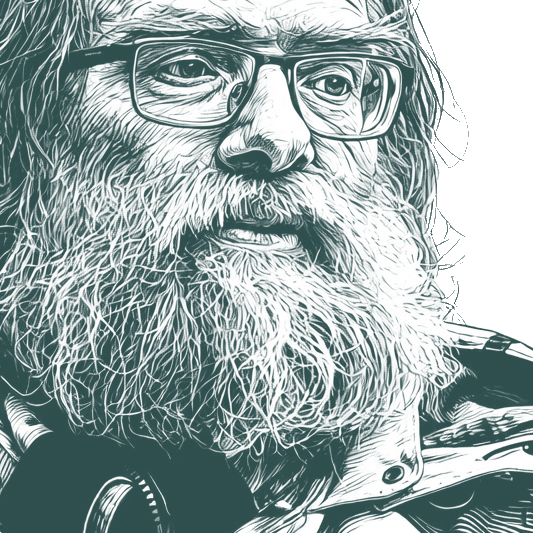
When Europeans first thought up the AIT around 1820 (after having espoused the OIT for half a century) and then took it to India, many Indians simply… - Koenraad Elst
""
When Europeans first thought up the AIT around 1820 (after having espoused the OIT for half a century) and then took it to India, many Indians simply denied that anyone had come from anywhere, and pointed out correctly that nothing amounting to what is known as the Aryan invasion (with the importation of Sanskrit from outside) is described in scripture... Both Sanskrit professor Nicholas Kazanas (Athens) and myself have many anecdotes up our sleeves of how any Homeland debate in which the OIT figures, is being stonewalled by AIT-leaning linguists... Then again, this genocide does exist, viz. as part of the Dravidianist mythology, especially in its missionary version, because of overcompensation for the real genocide of natives in the Americas that accompanied their Christianization. (Ch. 30)
English
Collect this quote
About
Koenraad Elst
Koenraad Elst (born 7 August 1959) is a Flemish right wing Hindutva author, known primarily for his support of the Out of India theory and the Hindutva movement. Scholars have accused him of harboring Islamophobia.
Likewise, central concepts of Sikhi are properly derived from ancient Hindu concepts, e.g. the mantra So’ham (“I am He”, viz. He who lives in the sun) has Vedic origins but reappears in glory in Sikh scripture and practice. The entry Dasham Granth recounts how the last Sikh Guru Govind Singh had stories from the Puranas translated for his flock. It hardly makes sense to argue this point further, for there are literally hundreds of indications for the view that Sikhi is just one among the many Hindu traditions.
The crime is not that a usurper structure was demolished, but that the government (egged on by the English media, the CPM, the JNU historians and similar usual suspects) had been thwarting the restoration of a Hindu sacred site to its pilgrim constituency, the Hindus. The right policy would have been to acknowledge and act upon the self-evident principle that a Hindu sacred site should be in Hindu custody and adorned with Hindu architecture. Will the secularists insist on the imposition of a Rama temple on the Kaaba site in Mecca, or on the Temple Mount in Jerusalem? Of course not, and for the same reason there should not be a mosque on a hill that for centuries has been the main site dedicated to Rama.
Unlimited Quote Collections
Organize your favorite quotes without limits. Create themed collections for every occasion with Premium.
Among Indian secularists, the done thing is to deny the long history of Islamic temple-destruction. Government policy is to sweep the topic under the carper whenever it raises its head, as by fortuitous archaeological discoveries. Thus, at the Rudramahalaya complex in Siddhpur, Gujarat, ASI excavation work was stopped under Muslim pressure, when temple remains came to light. When a flood brought Hindu sculptures under and around the Bijamandal mosque in Vidisha (where four successive Hindu temples had been destroyed by Shamsuddin Iltutmish, Alauddin Khilji, Bahadur Shah of Gujarat and Aurangzeb) to the surface in 1991, the ASI was likewise prevented from excavating further.