Among Indian secularists, the done thing is to deny the long history of Islamic temple-destruction. Government policy is to sweep the topic under the… - Koenraad Elst
""
Among Indian secularists, the done thing is to deny the long history of Islamic temple-destruction. Government policy is to sweep the topic under the carper whenever it raises its head, as by fortuitous archaeological discoveries. Thus, at the Rudramahalaya complex in Siddhpur, Gujarat, ASI excavation work was stopped under Muslim pressure, when temple remains came to light. When a flood brought Hindu sculptures under and around the Bijamandal mosque in Vidisha (where four successive Hindu temples had been destroyed by Shamsuddin Iltutmish, Alauddin Khilji, Bahadur Shah of Gujarat and Aurangzeb) to the surface in 1991, the ASI was likewise prevented from excavating further.
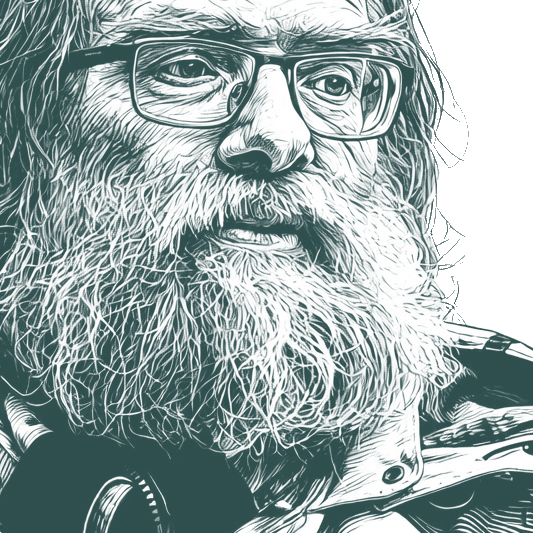
Koenraad Elst (born 7 August 1959) is a Flemish right wing Hindutva author, known primarily for his support of the Out of India theory and the Hindutva movement. Scholars have accused him of harboring Islamophobia.
It is not unfair to conclude that some of the pro-BMAC authors have committed serious breaches of academic deontology. For me personally, seeing this shameless overruling of historical evidence with a high-handed use of academic and media power, was the immediate reason to involve myself in this controversial question.
My job was not to survey other people's opinions about the Hindu movement. That would have been an interesting exercise, especially if it is called by its name, viz. a survey of outsider opinions, and not (as many such academic publications are) falsely presented as a study of the Hindu movement itself. By contrast, I endeavoured to get beyond the secondary--source and mainly hostile-source "research" that has so disastrously filled up this field of study, and focus on the primary sources instead.
Limited Time Offer
Premium members can get their quote collection automatically imported into their Quotewise collections.
But on Truschke’s own side, the dividing line between bullies and academics is not so neat. Why stoop to street bullying if you have tenure? It is far more effective, then, to resort to academic bullying. Thus, in their intervention in the California Textbook Affair, where Hindu parents had sought to edit blatantly anti-Hindu passages, the explicitly partisan intervening professors even managed to get themselves recognized as arbiters in the matter. This would have been unthinkable if those bullies had not been established academics. (And this I can say eventhough my criticism of the Hindu parents’ positions exists in cold print.) Her focus on street bullies has the effect of misdirecting the reader’s attention, away from the more consequential phenomenon of academic bullying.