After its publication, TBFS was released in multiple cities around the end of January and the beginning of February by some of India’s most well-know… - Rajiv Malhotra
""
After its publication, TBFS was released in multiple cities around the end of January and the beginning of February by some of India’s most well-known personalities: Subhash Chandra (Chairman of Zee Media) in Mumbai, Sri Sri Ravi Shankar (eminent spiritual leader and humanitarian) in Bengaluru, and Dr. Najma Akbarali Heptulla (Minority Affairs Minister, Government of India) in New Delhi. Prominent educational, spiritual, and social institutes in India hosted Malhotra during this period: Delhi University and Jawaharlal Nehru University (New Delhi); Ramakrishna Mission and IIT Madras (Chennai); Vedic Gurukulam (Bidadi); The Art of Living Ashram and Karnataka Sanskrit University (Bangalore); and Chinmaya Mission, IIT Bombay, and TISS (Mumbai). Malhotra also participated in a panel discussion at the Jaipur Literature Festival along with Amish Tripathi (bestselling fiction writer). This kind of reception is rarely seen in India for non-fiction books.
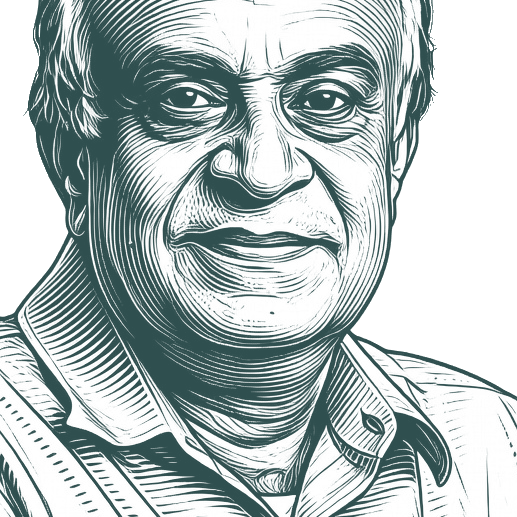
Rajiv Malhotra (born 15 September 1950) is an author and Hindu activist who, after a career in the computer and telecom industries, took early retirement in 1995 to establish The Infinity Foundation. Through this organization Malhotra has promoted philanthropic and educational activities in the area of Hinduism studies.
Wilhelm Halbfass, the late Indologist at the University of Pennsylvania, took such ridiculous statements into strange, speculative areas and wrote: Would it not be equally permissible to identify this underlying structure as 'deep Nazism' or 'deep Mimamsa'? And what will prevent us from calling Kumarila and William Jones 'deep Nazis' and Adolf Hitler a 'deep Mimamsaka'?
Western academics not only produce critical editions of dharma texts but determine the very categories of the discourse, the manner in which complex words and situations are contextualized, what is included as interesting and relevant (and what is left out), which social theories and textual hermeneutics are to be used, and who the authorities are in matters of interpretation. Engaging in sweeping generalizations, the Western academy routinely passes judgement on whether Hinduism is a legitimate religion, how and when it should be discussed (if at all), and who its authorized spokespersons are. All of this causes many in the dharmic traditions to doubt the legitimacy of their culture, especially in relation to the established, prevailing taxonomy.
Enhance Your Quote Experience
Enjoy ad-free browsing, unlimited collections, and advanced search features with Premium.
He then goes a step further and briefly imposes a Freudian reading on the text, a reading outdated and crude even in the current Western context of cultural criticism. He says the depiction of 'the other' in Ramayana can be understood as a projection of the unfulfilled sexual desires of traditional Indians. .... The motive of applying a totally alien framework, viz., the Freudian one, to a traditional Hindu text is something that is questionable.