"INDECISION, n. The chief element of success; "for whereas," saith Sir Thomas Brewbold, "there is but one way to do nothing and divers way to do some… - Ambrose Bierce
"INDECISION, n. The chief element of success; "for whereas," saith Sir Thomas Brewbold, "there is but one way to do nothing and divers way to do something, whereof, to a surety, only one is the right way, it followeth that he who from indecision standeth still hath not so many chances of going astray as he who pusheth forwards" — a most clear and satisfactory exposition on the matter. "Your prompt decision to attack," said Genera Grant on a certain occasion to General Gordon Granger, "was admirable; you had but five minutes to make up your mind in." "Yes, sir," answered the victorious subordinate, "it is a great thing to be know exactly what to do in an emergency. When in doubt whether to attack or retreat I never hesitate a moment — I toss us a copper." "Do you mean to say that's what you did this time?" "Yes, General; but for Heaven's sake don't reprimand me: I disobeyed the coin.
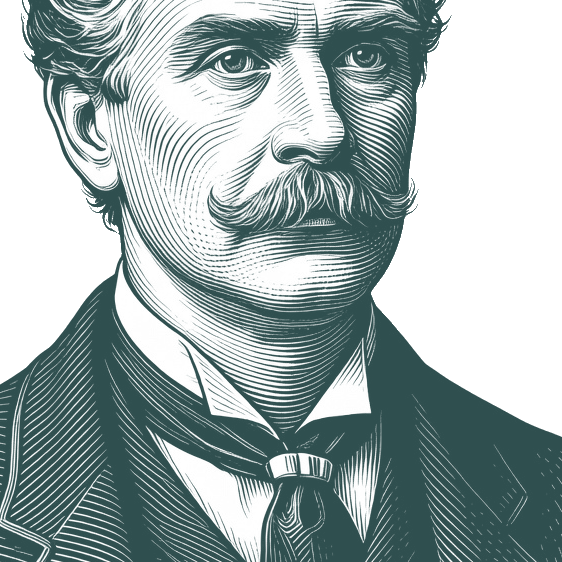
Ambrose Gwinnett Bierce (June 24, 1842 – date of death uncertain; probably late 1912 or early 1914) was an American satirist, critic, short story writer, editor and journalist. He is perhaps most famous for his serialized mock lexicon, The Devil's Dictionary, in which, over the years, he scathed American culture and accepted wisdom by pointing out alternate, more practical definitions for common words.
Biography information from
Wikiquote·
Portrait adapted from
Wikimedia Commons, John Herbert Evelyn Partington (Public domain / CC0)
When men perceive that nothing is restraining them but their consent to be restrained, then at last there is nothing to obstruct the free play of selfishness which is the dominant characteristic and fundamental motive of human nature and human action respectively. Politics, which may have had something of the character of a contest of principles, becomes a struggle of interests, and its methods are frankly serviceable to personal and class advantage. Patriotism and respect for the law pass like a tale that is told. Anarchy, no longer disguised as ‘government by consent,’ reveals his hidden hand…
ZEAL, n. A certain nervous disorder afflicting the young and inexperienced. A passion that goeth before a sprawl.
Enhance Your Quote Experience
Enjoy ad-free browsing, unlimited collections, and advanced search features with Premium.
SOUL, n. A spiritual entity concerning which there hath been brave disputation. Plato held that those souls which in a previous state of existence (antedating Athens) had obtained the clearest glimpses of eternal truth entered into the bodies of persons who became philosophers. Plato himself was a philosopher. The souls that had least contemplated divine truth animated the bodies of usurpers and despots.