Fact one: Currently humanity uses 30 percent more of our planet’s natural resources than we can replace. Fact two: If everyone on this planet wanted … - Peter Diamandis
""
Fact one: Currently humanity uses 30 percent more of our planet’s natural resources than we can replace. Fact two: If everyone on this planet wanted to live with the lifestyle of the average European, we would need three planets’ worth of resources to pull it off. Fact three: If everyone on this planet wished to live like an average North American, then we’d need five planets to pull it off.
English
Collect this quote
About
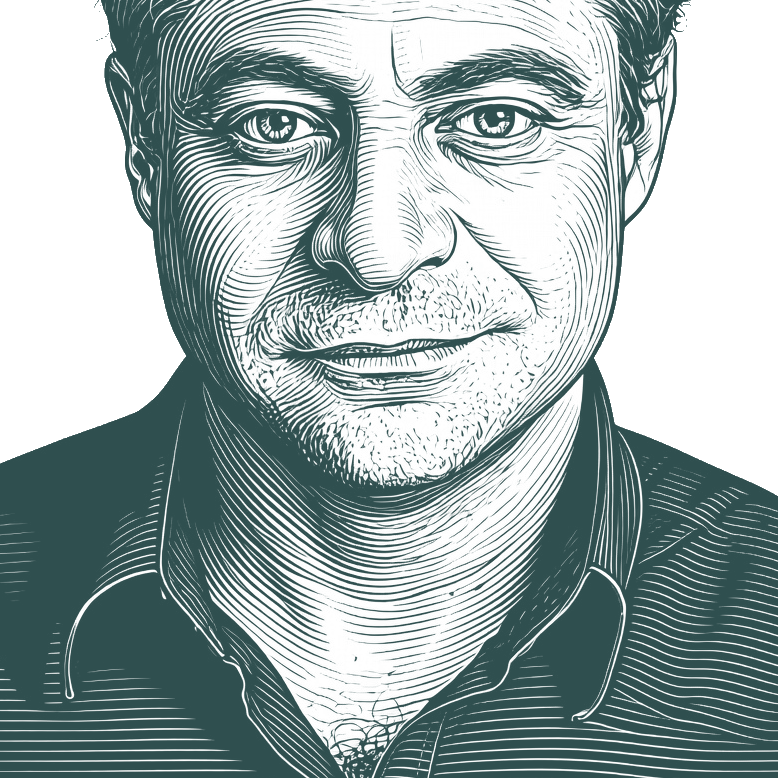
Peter Diamandis
Peter H. Diamandis (born May 20, 1961) is an American engineer, physician, and entrepreneur. He is best known as the founder and chairman of the XPRIZE Foundation, and the cofounder and executive chairman of Singularity University. He is also cofounder and former CEO of the Zero Gravity Corporation, cofounder and vice chairman of Space Adventures Ltd., founder and chairman of the Rocket Racing League, cofounder of the International Space University, cofounder of Planetary Resources, cofounder of Celularity, founder of Students for the Exploration and Development of Space, and vice chairman and cofounder of Human Longevity, Inc.
Henry Ford, when asked about his employees, said it best: “None of our men are ‘experts.’ We have most unfortunately found it necessary to get rid of a man as soon as he thinks himself an expert because no one ever considers himself expert if he really knows his job. A man who knows a job sees so much more to be done than he has done, that he is always pressing forward and never gives an instant of thought to how good and how efficient he is. Thinking always ahead, thinking always of trying to do more, brings a state of mind in which nothing is impossible. The moment one gets into the ‘expert’ state of mind a great number of things become impossible.
A quarter of the planet's available landmass is currently used to keep 20 billion chickens, 1.5 billion cattle, and 1 billion sheep alive —
Enhance Your Quote Experience
Enjoy ad-free browsing, unlimited collections, and advanced search features with Premium.
The human brain evolved in an environment that was local and linear. Local, meaning most everything that we interacted with was less than a day's walk away. Linear, meaning the rate of change was exceptionally slow. Your great-great-great-grandfather's life was roughly the same as his great-great-grandson's life. But now we live in a world that is global and exponential. Global, meaning if it happens on the other side of the planet, we hear about it seconds later (and our computers hear about it only milliseconds later). Exponential, meanwhile, refers to today's blitzkrieg speed of development. Forget about the difference between generations, currently mere months can bring a revolution. Yet our brain — which hasn't really had a hardware update in two hundred thousand years — wasn't designed for this scale or speed. And if we struggle to track the growth of singular innovations, we're downright helpless in the face of converging ones. Put it this way, in