You have not built your mind. And in moments in which you seem to build it — when you make an effort to change yourself, to acquire knowledge, or to … - Sam Harris
""
You have not built your mind. And in moments in which you seem to build it — when you make an effort to change yourself, to acquire knowledge, or to perfect a skill — the only tools at your disposal are those that you have inherited from moments past.
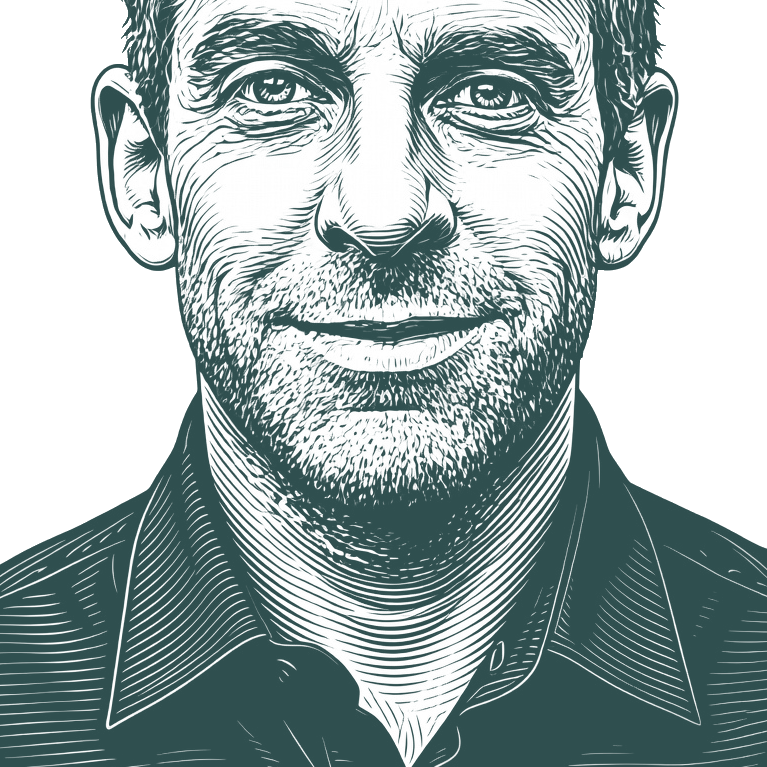
Samuel Benjamin Harris (born April 9, 1967) is an American author, philosopher, public intellectual, and neuroscientist, as well as the co-founder and CEO of Project Reason. He is the author of The End of Faith (2004), which won the PEN/Martha Albrand Award for First Nonfiction in 2005 and appeared on The New York Times best seller list for 33 weeks, Letter to a Christian Nation (2006), The Moral Landscape (2010), Lying (2011), Free Will (2012), and most recently Waking Up: A Guide to Spirituality Without Religion (2014).
Biography information from
Wikiquote·
Portrait adapted from
Wikimedia Commons, Cmichel67 (Christopher Michel) (CC BY-SA)
Spirituality begins with a reverence for the ordinary that can lead us to insights and experiences that are anything but ordinary.
Our habitual identification with thought — that is, our failure to recognize thoughts *as thoughts,* as appearances in consciousness — is a primary source of human suffering. It also gives rise to the illusion that a separate self is living inside one’s head.
Go Premium
Support Quotewise while enjoying an ad-free experience and premium features.
Few scientists and philosophers have developed strong skills of introspection — in fact, most doubt that such abilities even exist. Conversely, many of the greatest contemplatives know nothing about science. But there is a connection between scientific fact and spiritual wisdom, and it is more direct than most people suppose. Although the insights we can have in meditation tell us nothing about the origins of the universe, they do confirm some well-established truths about the human mind: Our conventional sense of self is an illusion; positive emotions, such as compassion and patience, are teachable skills; and the way we think directly influences our experience of the world.