This may be illustrated by the Taoist story of a farmer whose horse ran away. That evening the neighbors gathered to commiserate with him since this … - Alan Watts
""
This may be illustrated by the Taoist story of a farmer whose horse ran away. That evening the neighbors gathered to commiserate with him since this was such bad luck. He said, “May be.” The next day the horse returned, but brought with it six wild horses, and the neighbors came exclaiming at his good fortune. He said, “May be.” And then, the following day, his son tried to saddle and ride one of the wild horses, was thrown, and broke his leg. Again the neighbors came to offer their sympathy for the misfortune. He said, “May be.” The day after that, conscription officers came to the village to seize young men for the army, but because of the broken leg the farmer’s son was rejected. When the neighbors came in to say how fortunately everything had turned out, he said, “May be.”14
English
Collect this quote
About
Alan Watts
Alan Wilson Watts (6 January 1915 – 16 November 1973) was an English philosopher, writer, speaker, and expert in comparative religion.
Biography information from
Wikiquote·
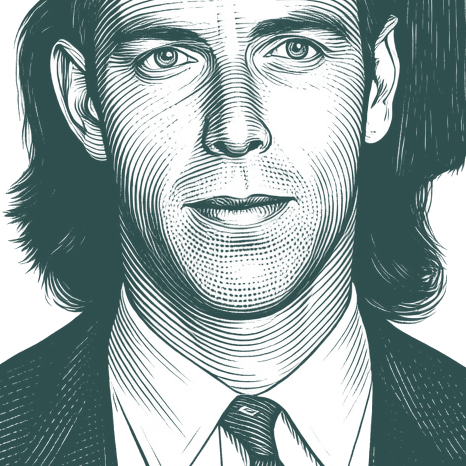
Portrait adapted from
Wikimedia Commons, The University of Vermont Alumni Magazine vol. 39 no. 01, p. 22. (Public domain / CC0)
Also Known As
Alternative Names:
Alan Wilson Watts
•
Alan W. Watts
[W]hen we think about our feelings, we tend to represent them as fixed states. Such words as anger, depression, fear, grief, anxiety and guilt suggest uniform states which tend to persist if no action is taken to change or release them. [...] [W]e still think of negative feelings as disorders of the mind which need to be cured. But what needs to be cured is the inner resistance to those feelings which moves us to dissipate them in precipitate action. To resist the feeling is to be unable to contain it long enough for it to work itself out.
In sum, then, I have tried to show that reincarnation has very strong theoretical probability, without resorting to the paranormal evidence and even without being able to explain the transmission of memories. I have carefully avoided bringing in the moral and retributive arguments, since they have little force, and I do not find a person’s fortunes or misfortunes explained by a former life. I find the explanation postponed, as in all attempts to explain the present by the past. But it is basically an intellectual block to find it incredible that you have more than one life. It is just as incredible that we have this one. It is still more incredible to suppose that what has happened once cannot happen again.
It is obviously the purest anthropomorphism to assume that the absence of a human quality in bird, cloud, or star is the presence of a total blank, or to assume that what is not conscious is merely unconscious. Nature is not necessarily arranged in accordance with the system of mutually exclusive alternatives which characterize our language and logic.