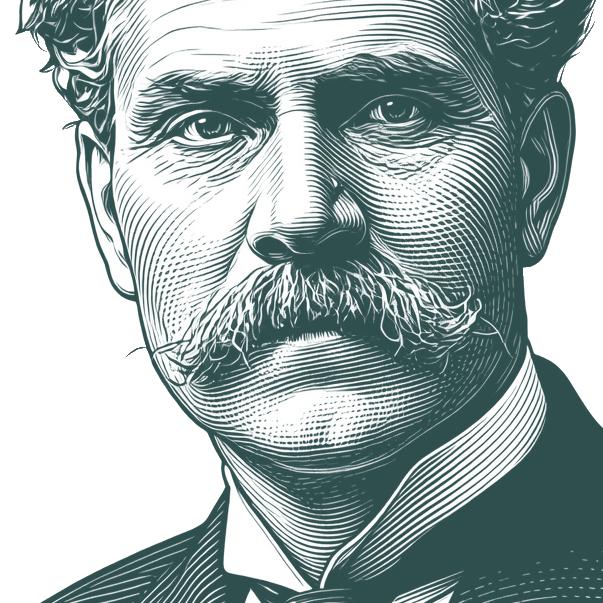
[A]ny idea which assumes that the interests of the proletariat are so simply opposed to those of the bourgeoisie as to make the proletariat feel a on… - Ramsay MacDonald
""
[A]ny idea which assumes that the interests of the proletariat are so simply opposed to those of the bourgeoisie as to make the proletariat feel a oneness of economic interest is purely formal and artificial... [T]o-day there is still a goodly number of workmen who cross the line and become employers or employing managers, whilst the great thrift movements, the Friendly Societies, the Building Societies, the Co-operative Societies, connect working class interests to the existing state of things. In addition, there are considerable classes of workers in the community whose immediate interests are bound up with the present distribution of wealth, and who, obedient to class interests, would range themselves on the side of the status quo. Of course (it could be said that) they are making a mistake from the point of view of their own interests, and that if they were properly enlightened they would see that they belong to an exploited class, one and indivisible. That may be true, but a mode of action which is ineffective until men are "fully enlightened" is a chimera.
Ramsay MacDonald (12 October 1866 – 9 November 1937) was a British statesman who was the first ever Labour Prime Minister of the United Kingdom, leading a Labour Government in 1924, a Labour Government from 1929 to 1931, and a National Government from 1931 to 1935.
Portrait adapted from
Wikimedia Commons, Walter Stoneman (Public domain / CC0)
Also Known As
Birth Name:
James Ramsay MacDonald
•
James McDonald Ramsay
Alternative Names:
J. R. M.
•
J. Ramsay McDonald
•
J. Ramsay MacDonald
Our loss of belief in the Liberal party is therefore owing to the fact that its day of historical fitness has passed away. The new problems of progress will demand treatment by men of different outlook, of a different political principle, of a different mental quality, of a new species of democratic sympathy. The mass of the Liberal party will no doubt continue progressive, but their organisation is not now the sole custodian of the progressive cause... The Independent Labour party is in the true line of the progressive apostolic succession. It alone is able to interpret the spirit of the time.
The economic truths of Socialism, its industrialism, and its sociology, must remain the vainest of vain dreamings unless we preserve among the people the political frame of mind which can appreciate democratic liberty and worth. When "a man's a man for a' that" is recited without making the blood tingle, the man has ceased to be.
Unlimited Quote Collections
Organize your favorite quotes without limits. Create themed collections for every occasion with Premium.
[W]e shall begin the exploitation of national resources like mines; or we shall begin the process of industrial reconstruction by agrarian policies which will bring the towns into contact with the country, re-populate the deserted villages, and re-till the waste fields.