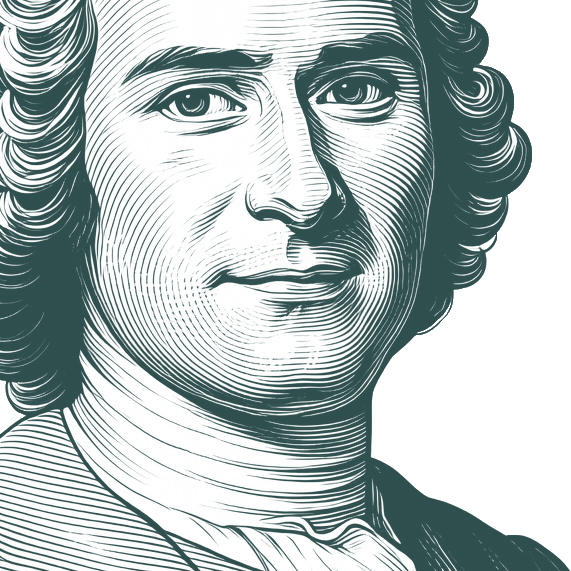
Jean-Jacques Rousseau (June 28, 1712 – July 2, 1778) was a major French-speaking Genevan philosopher of Enlightenment whose political ideas influenced the French Revolution, the development of socialist theory, and the growth of nationalism.
Biography information from
Wikiquote·
Portrait adapted from
Wikimedia Commons, Maurice Quentin de La Tour (Public domain / CC0)
Also Known As
Alternative Names:
Citizen of Geneva
•
Jean Jacques Rousseau
•
J. J. Rousseau
•
Rousseau
•
J.J. Rousseau
•
JJ Rousseau
Doğa vücudu güçlendirmek ve geliştirmek için birtakım olanaklara sahiptir ki bunları hiçbir zaman engellememek gerekir. Bir çocuğu gitmek istediğinde yerinde kalmaya, yerinde kalmak istediğinde de gitmeye zorlamamak gerekir. Çocuklar, iradeleri bizim yanlışımız yüzünden bozulmamışsa, boşuna bir şey istemezler. Canları istediğinde zıplamalı, koşmalı, bağırmalıdırlar. Tüm hareketleri, güçlenmeye çalışan bünyelerinin gereksinimleridir: Ancak tek başlarına yerine getiremeyecekleri ve başkalarının onlar için yerine getirmek zorunda olacağı arzularını kuşkuyla karşılamalıdır. O zaman gerçek gereksinimi, doğal gereksinimi, doğmaya başlayan hayali gereksinimden ya da sözünü etmiş olduğum yalnızca yaşam taşkınlığından kaynaklı gereksinimden ayırt etmek gerekir.
gratitude is a duty which ought to be paid but which none have a right to expect
Go Premium
Support Quotewise while enjoying an ad-free experience and premium features.
At first our pupil had merely sensations, now he has ideas; he could only feel, now he reasons. For from the comparison of many successive or simultaneous sensations and the judgment arrived at with regard to them, there springs a sort of mixed or complex sensation which I call an idea. The way in which ideas are formed gives a character to the human mind. The mind which derives its ideas from real relations is thorough; the mind which relies on apparent relations is superficial. He who sees relations as they are has an exact mind; he who fails to estimate them aright has an inaccurate mind; he who concocts imaginary relations, which have no real existence, is a madman; he who does not perceive any relation at all is an imbecile. Clever men are distinguished from others by their greater or less aptitude for the comparison of ideas and the discovery of relations between them. Simple ideas consist merely of sensations compared one with another. Simple sensations involve judgments, as do the complex sensations which I call simple ideas. In the sensation the judgment is purely passive; it affirms that I feel what I feel. In the percept or idea the judgment is active; it connects, compares, it discriminates between relations not perceived by the senses. That is the whole difference; but it is a great difference. Nature never deceives us; we deceive ourselves.