We believe that we can change the things around us in accordance with our desires — we believe it because otherwise we can see no favourable outcome.… - Marcel Proust
""
We believe that we can change the things around us in accordance with our desires — we believe it because otherwise we can see no favourable outcome. We do not think of the outcome which generally comes to pass and is also favourable: we do not succeed in changing things in accordance with our desires, but gradually our desires change. The situation that we hoped to change because it was intolerable becomes unimportant to us. We have failed to surmount the obstacle, as we were absolutely determined to do, but life has taken us round it, led us beyond it, and then if we turn round to gaze into the distance of the past, we can barely see it, so imperceptible has it become.
Valentin Louis Georges Eugène Marcel Proust (10 July 1871 – 18 November 1922) was a French novelist, essayist and critic.
Biography information from
Wikiquote·
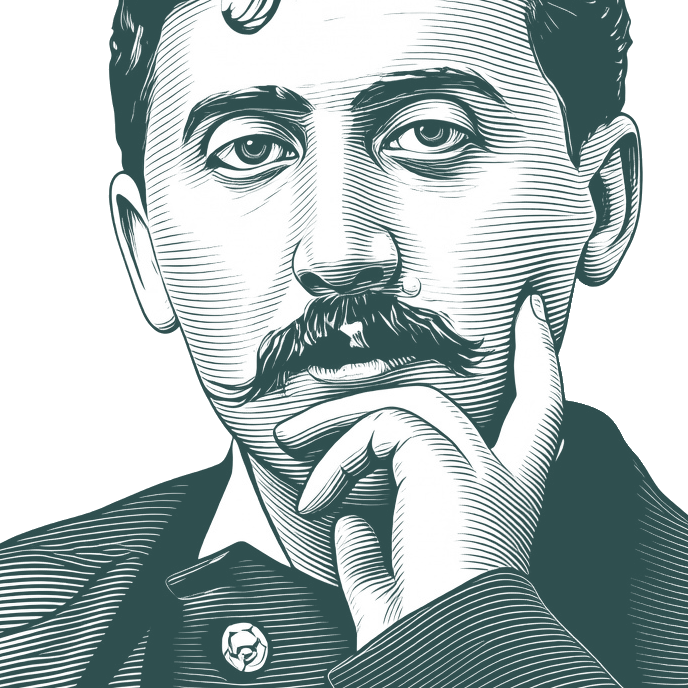
Portrait adapted from
Wikimedia Commons, Otto Wegener (Public domain / CC0)
Also Known As
Alternative Names:
Valentin Louis Georges Eugène Marcel Proust
•
Proust
•
Valentin Louis Georges Eugéne Marcel Proust
•
Valentin-Louis-Georges-Eugéne-Marcel Proust
•
Valentin Louis Georges Eugene Marcel Proust
•
Valentin-Louis-Georges-Eugene-Marcel Proust
•
Bernard d'Algouvres
•
Valentin-Louis-Georges-Eugène-Marcel Proust
For we are not as faithful to the being we have most loved as we are to ourselves and sooner or later we forget her — since that is one of our characteristics — so as to start loving another.
I felt myself still reliving a past which was no longer anything more than the history of another person;
Unlimited Quote Collections
Organize your favorite quotes without limits. Create themed collections for every occasion with Premium.
When we are in love, our love is too big a thing for us to be able altogether to contain it within ourselves. It radiates towards the loved one, finds there a surface which arrests it, forcing it to return to its starting-point, and it is this repercussion of our own feeling which we call the other's feelings and which charms us more then than on its outward journey because we do not recognise it as having originated in ourselves.