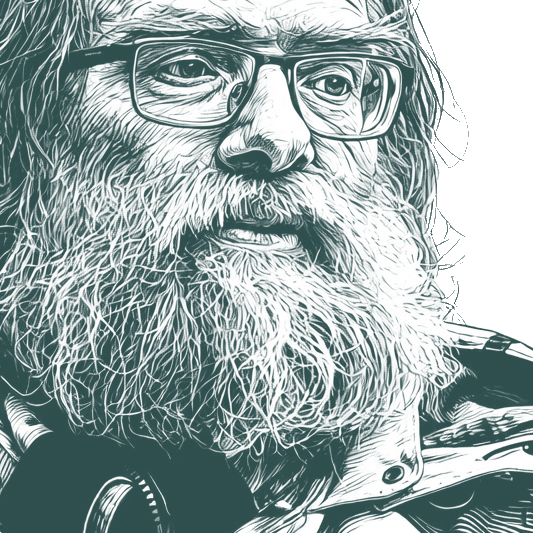
But the point is, while one cannot blame the Muslim propagandists for painting a rosy picture of the religion they try to sell, we now see eminent hi… - Koenraad Elst
""
But the point is, while one cannot blame the Muslim propagandists for painting a rosy picture of the religion they try to sell, we now see eminent historians spreading this utterly untruthful item of propaganda, in books which are required reading in many universities. They even lecture others and call them communalists if they don't swallow these Islamic-cum-Nehruvian lies.
English
Collect this quote
About
Koenraad Elst
Koenraad Elst (born 7 August 1959) is a Flemish right wing Hindutva author, known primarily for his support of the Out of India theory and the Hindutva movement. Scholars have accused him of harboring Islamophobia.
Indeed, over the years I have had many a good laugh at the pompous moralism and blatant dishonesty of India's so-called secularists. Their specialty is to justify double standards, e.g. why mentioning murdered Kashmiri Pandits is “communal hate-mongering” while the endless litany about murdered Gujarati Muslims is “secular consciousness-raising”. Sometimes they merely stonewall inconvenient information, such as when they tried to deny and suppress the historical data about the forcible replacement of a Rama temple in Ayodhya by a mosque: given the strength of the evidence, all they could do was to drown out any serious debate with screams and swearwords. But often they do bring out their specific talents at sophistry, such as when they argue that a Common Civil Code, a defining element of all secular states, is a Hindu communalist notion, while the preservation of the divinely-revealed Shari’a for the Muslims is secular. That’s when they are at their best.
Similarly calculating from the available figures for the three countries, the Hindu percentage had come down to 65.15% in 1991. To evaluate the trend of the Hindu percentage, we must take into account that the pre-Independence census always had a tentative category "tribal" or "animist", variously defined and therefore making odd quantitative jumps (but always between 2.26% and 3.26%), from 2.57% in 1881 to 2.26% in 1941. After Independence, this category was included in the Hindu category. So, putting everything on the post-Independence denominator, we include the "animists" in the Hindu percentage to get a total Hindu percentage of 77.35% for 1881, 71.72% for 1941, and 65.15% for 1991. Here again, we see a long-term acceleration of the observed trend: a decrease of 5.63% in the sixty years between 1881 and 1941, and a larger decrease of 6.57% in the shorter period of fifty years between 1941 and 1991.
PREMIUM FEATURE
Advanced Search Filters
Filter search results by source, date, and more with our premium search tools.
This book is part of a polemic. So far, the polemical arrows have all been shot from one side, replies from the other side beignn extremely rare and never more than piecemeal. (Foreword)