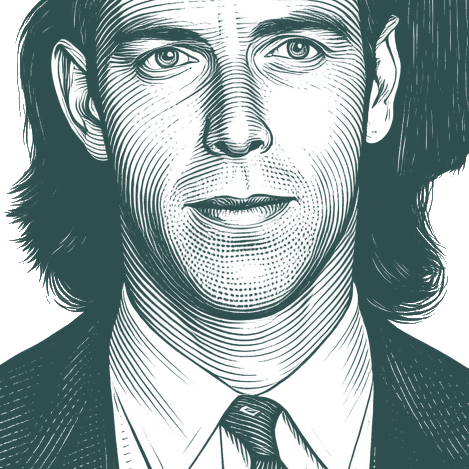
The more we accustom ourselves to understanding the present in terms of memory, the unknown by the known, the living by the dead, the more desiccated… - Alan Watts
""
The more we accustom ourselves to understanding the present in terms of memory, the unknown by the known, the living by the dead, the more desiccated and embalmed, the more joyless and frustrated life becomes. So protected from life, man becomes a sort of mollusc encrusted in a hard shell of “tradition,” so that when at last reality breaks through, as it must, the tide of pent-up fear runs wild.
English
Collect this quote
About
Alan Watts
Alan Wilson Watts (6 January 1915 – 16 November 1973) was an English philosopher, writer, speaker, and expert in comparative religion.
Biography information from
Wikiquote·
Portrait adapted from
Wikimedia Commons, The University of Vermont Alumni Magazine vol. 39 no. 01, p. 22. (Public domain / CC0)
Also Known As
Alternative Names:
Alan Wilson Watts
•
Alan W. Watts
Portrait from Wikimedia Commons. Credit: The University of Vermont Alumni Magazine vol. 39 no. 01, p. 22.. Used under Public domain / CC0. Processed and styled by Quotewise.
Go Premium
Support Quotewise while enjoying an ad-free experience and premium features.
Related quotes. More quotes will automatically load as you scroll down, or you can use the load more buttons.
Shorter versions of this quote
The more we accustom ourselves to understanding the present in terms of memory, the unknown by the known, the living by the dead, the more desiccated and embalmed, the more joyless and frustrated life becomes.
The man of perfect virtue in repose has no thoughts, in action no anxiety. He recognizes no right, nor wrong, nor good, nor bad. Within the Four Seas, when all profit — that is his repose. Men cling to him as children who have lost their mothers; they rally around him as wayfarers who have missed their road. He has wealth to spare, but he knows not whence it comes. He has food and drink more than sufficient, but knows not who provides it…. In an age of perfect virtue, good men are not appreciated; ability is not conspicuous. Rulers are mere beacons, while the people are as free as the wild deer. They are upright without being conscious of duty to their neighbors. They love one another without being conscious of charity. They are true without being conscious of loyalty. They are honest without being conscious of good faith. They act freely in all things without recognizing obligations to anyone. Thus, their deeds leave no trace; their affairs are not handed down to posterity.5 [62a]
The truth is that people who live for the future are, as we say of the insane, “not quite all there” — or here: by overeagerness they are perpetually missing the point. Foresight is bought at the price of anxiety, and, when overused, it destroys all its own advantages.